
What a Multi-Entity ERP Rollout Teaches You
Practical lessons from implementing an ERP across multiple entities and sites, from design to go-live and beyond.
· 3 min read
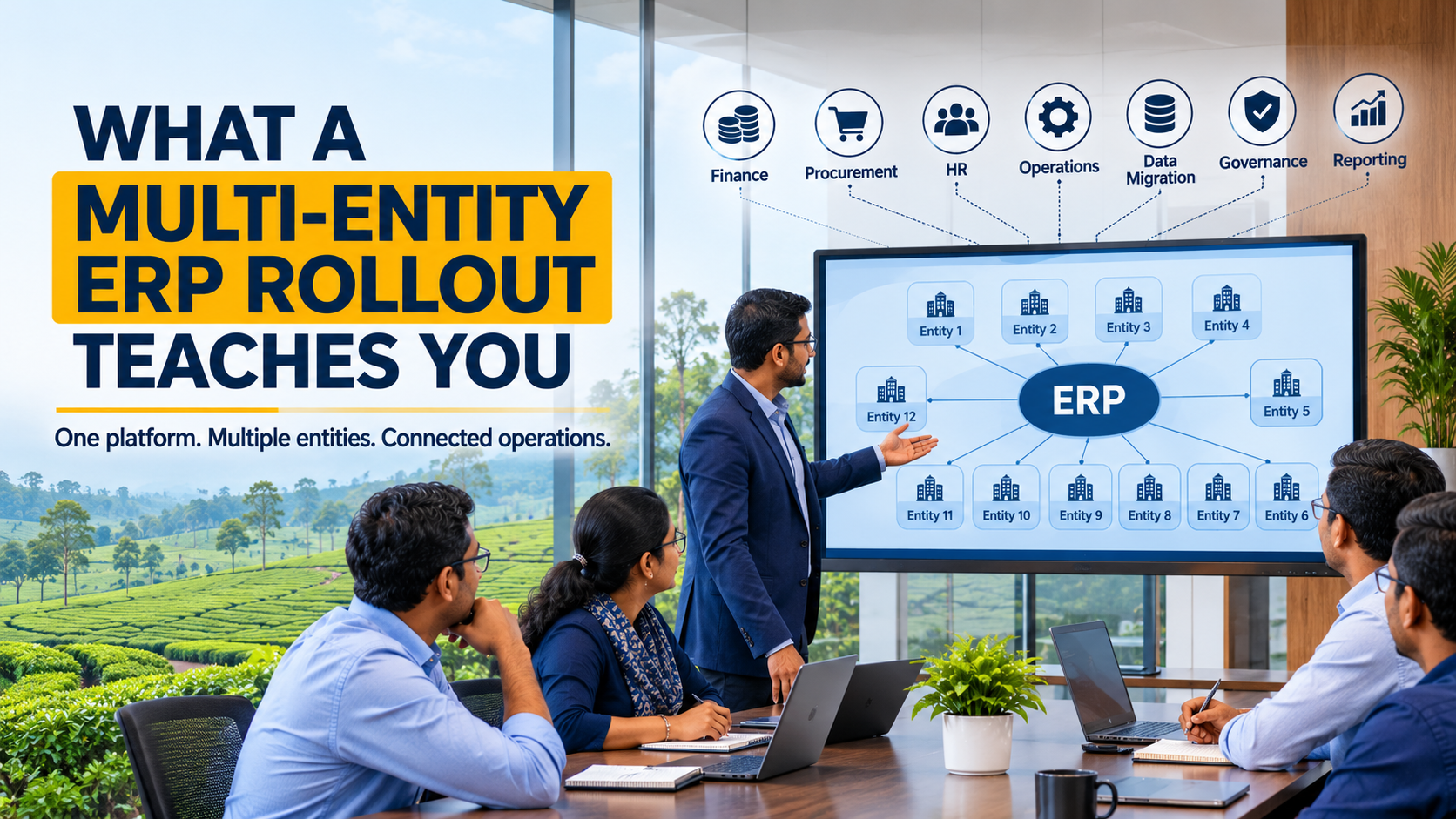
I led the Sage 300 ERP implementation at Duncan Brothers (Bangladesh), covering 12 business entities and 15 tea estates across finance, procurement, HR, operations, and estate management. These are the lessons I would pass to anyone starting something similar.
1. Design the chart of accounts and structure first
In a group with many entities, the account structure, segments and cost centers decide whether consolidated reporting is easy or painful. Settle it early, with finance in the room. Changing it after transactions exist is expensive.
2. Standardize where you can, localize where you must
Every entity will say it is unique. Some are. Most differences are habit. I use a simple rule: standardize the process by default, and allow variation only when it is justified by regulation or a real operational difference. A common template keeps support and upgrades manageable.
3. Treat data migration as its own project
Migration is rarely the glamorous part, and it is where schedules slip. Plan for:
- Cleansing and de-duplication of vendors, items and employee records before loading.
- Multiple trial loads, each reconciled against the legacy totals.
- A clear cut-off and a sign-off from the data owner in each department.
4. Integration decides the real value
An ERP seldom lives alone. Payroll inputs, attendance, asset registers and reporting tools all touch it. Decide early which system is the source of truth for each data item, and build integrations through documented APIs rather than shared database tricks, which break at upgrade time.
5. Build around the ERP, not inside it
When the ERP does not cover a need, resist heavy customization of the core. I have found it more sustainable to build companion applications that connect through the API. It keeps the core upgradable and lets you move faster on the edges. Our internal asset and task management platform, AssetTaskPro, follows this idea: purpose-built, and separate from the ERP.
6. Plan for go-live and the weeks after
- Run a dress rehearsal with real users and real scenarios.
- Staff a visible support desk, and track issues openly.
- Expect a dip in productivity. Tell leadership in advance so it does not look like failure.
- Schedule a review at 30, 90, and 180 days to capture what to fix.
7. Governance after go-live
An ERP degrades without ownership. Establish a change control process, role-based access reviews, and a regular rhythm for enhancements. Name process owners in the business, not only system administrators in IT.
Closing thought
A successful ERP is a business achievement supported by technology. Invest in design, data and people, and keep the system as close to standard as the business allows.
Share
Keep reading
Related articles
· 1 min read
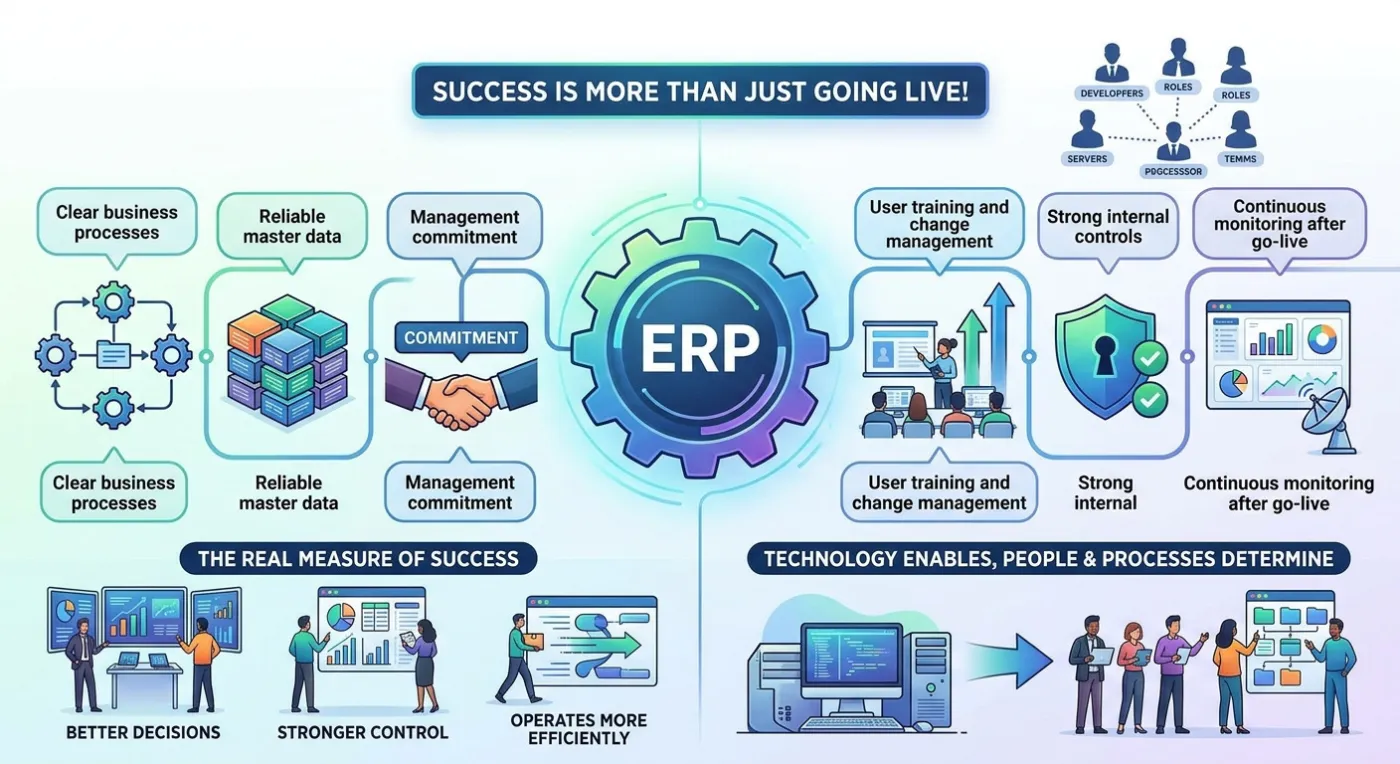
ERP Implementation Is Not an IT Project. It Is a Business Transformation
Going live is not the goal—business transformation is. A truly successful ERP implementation isn’t defined by software installation, but by clear processes, reliable data, and driving smarter decision-making across the organization.
ERP & Business Applications
· 7 min read
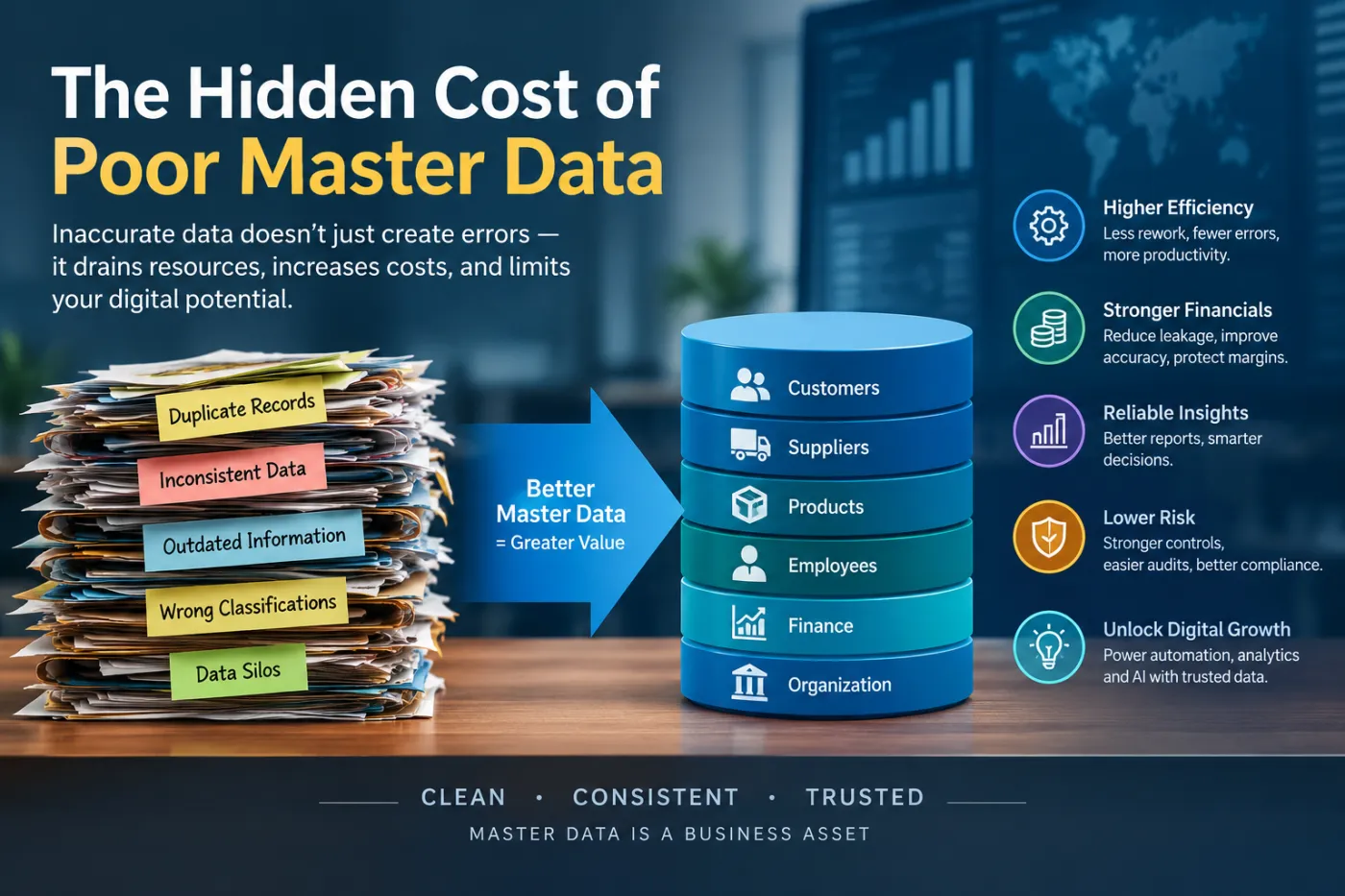
The Hidden Cost of Poor Master Data: Why Data Quality Is a Business Priority
Technology cannot deliver its full potential when the data behind it is unreliable. From ERP performance to AI-driven insights, poor master data creates hidden risks that affect profitability, compliance, and strategic decisions. For today's IT leaders, establishing data ownership, governance, and quality standards is not optional—it is a business imperative.
ERP & Business Applications
· 6 min read
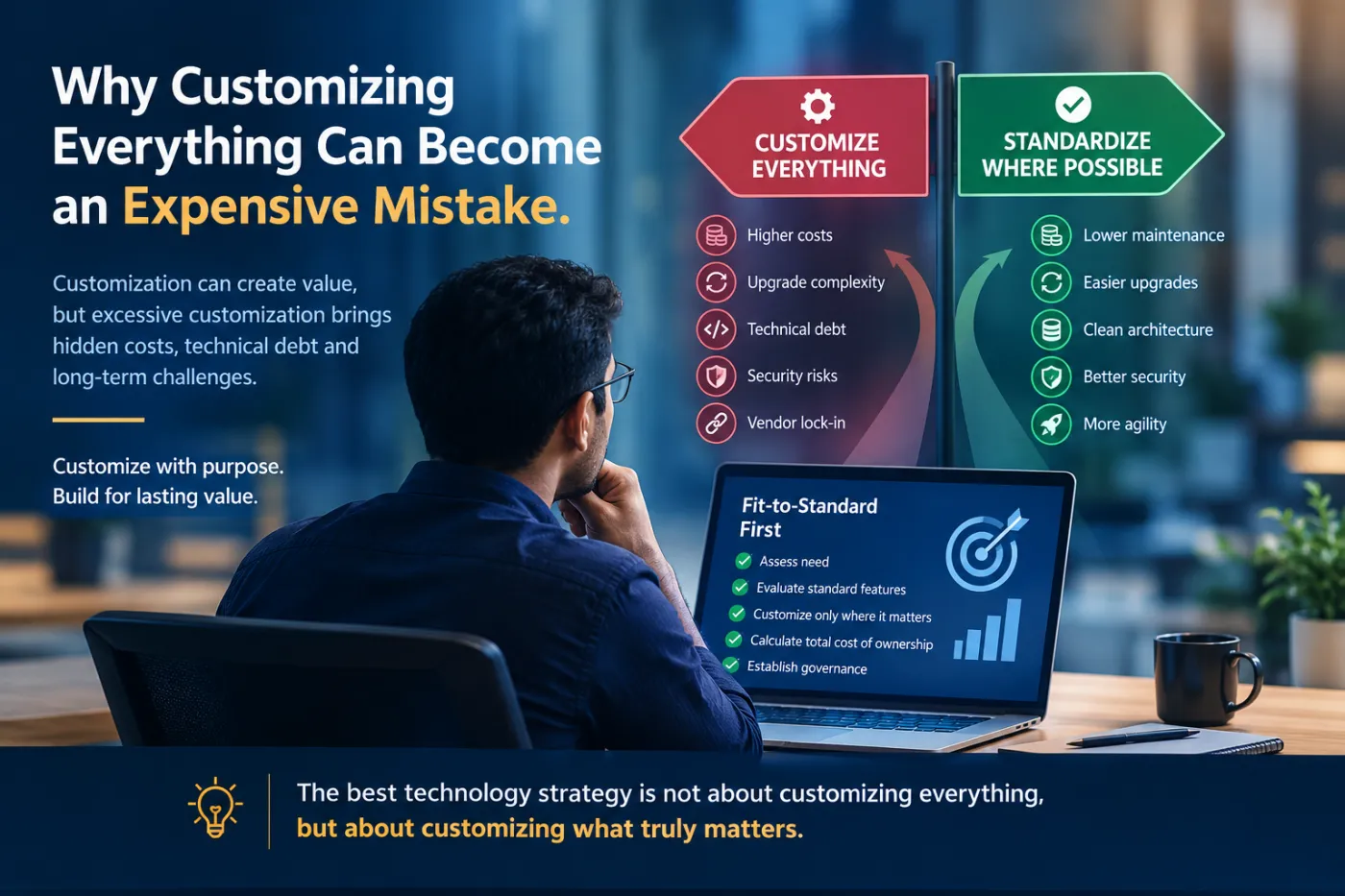
Why Customizing Everything Can Become an Expensive Mistake
Every customization comes with a cost beyond development. From security risks and vendor dependencies to expensive upgrades and ongoing maintenance, unnecessary modifications can undermine long-term digital transformation. Smart IT leadership prioritizes fit-to-standard approaches, measurable business value, and sustainable architecture—because the best technology strategy is not about customizing everything, but about customizing what truly matters.
ERP & Business Applications