
Why Customizing Everything Can Become an Expensive Mistake
Every customization comes with a cost beyond development. From security risks and vendor dependencies to expensive upgrades and ongoing maintenance, unnecessary modifications can undermine long-term digital transformation. Smart IT leadership prioritizes fit-to-standard approaches, measurable business value, and sustainable architecture—because the best technology strategy is not about customizing everything, but about customizing what truly matters.
· 6 min read
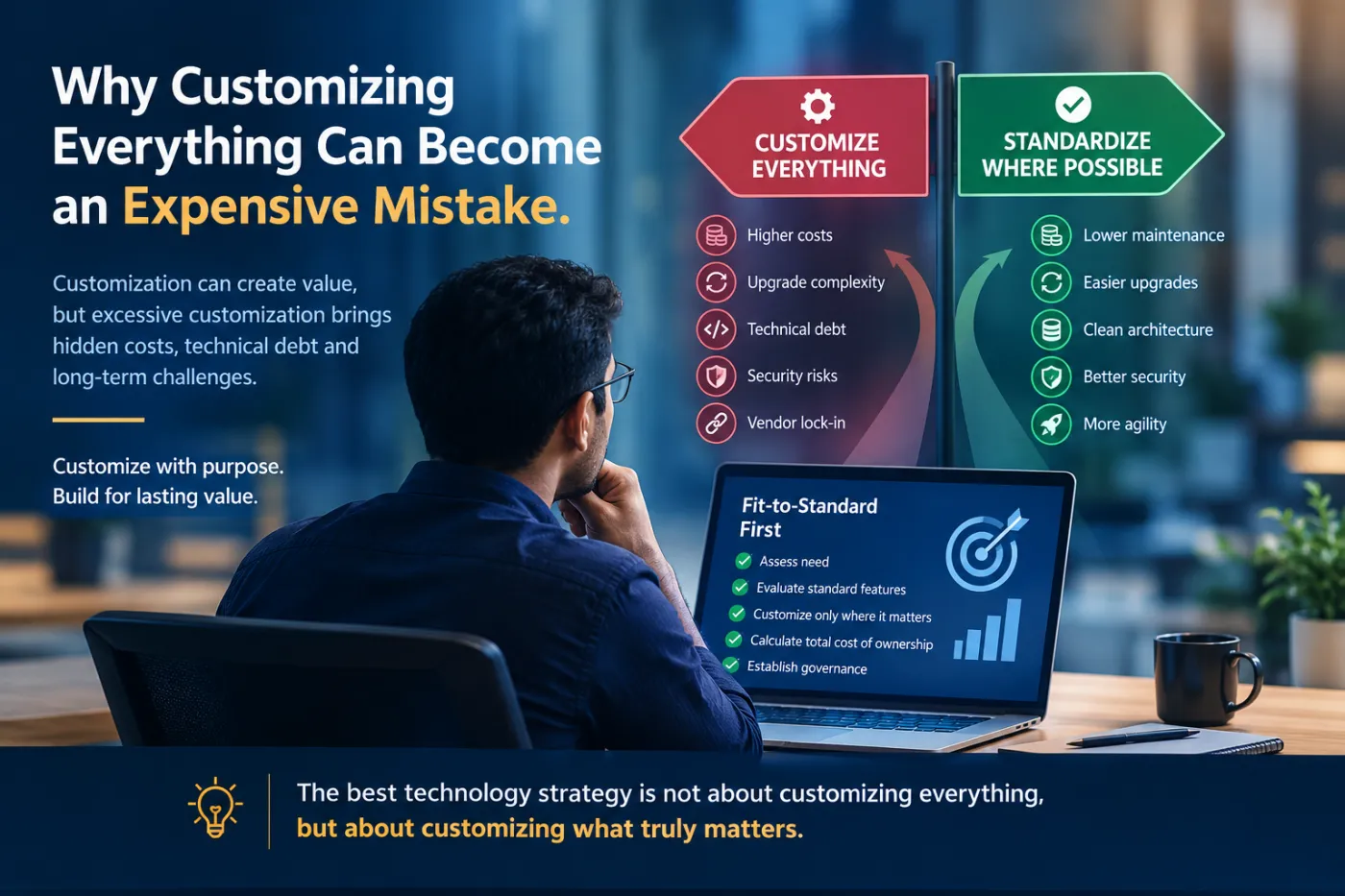
In today’s digital landscape, customization is often seen as a sign of innovation. Organizations want software that matches their workflows, reflects their business processes, and delivers a competitive advantage. While customization can create significant business value, customizing everything can become one of the most expensive mistakes an organization makes.
The real challenge is not deciding whether to customize. It is knowing what to customize, what to standardize, and when to say no.
The Hidden Cost of Customization
Every custom feature comes with more than its initial development cost. It introduces additional testing, documentation, security considerations, integration requirements, and long-term maintenance responsibilities.
A seemingly small modification to an ERP, CRM, or business application may require continuous adjustments whenever the underlying platform is upgraded. Over time, these individual changes accumulate, creating a complex environment that becomes increasingly difficult and expensive to maintain.
What begins as a solution to a business problem can gradually become a permanent IT burden.
1. Higher Development and Maintenance Costs
Custom software requires specialized development resources, detailed requirements, testing, and ongoing support. Unlike standard features maintained by a software vendor, custom functionality often remains the organization's responsibility.
The initial development budget rarely captures the full cost of ownership.
Organizations must consider the total cost across the entire lifecycle, including development, infrastructure, support, upgrades, troubleshooting, and eventual replacement.
The cheapest feature to build is not always the cheapest feature to own.
2. Upgrade Complexity and Vendor Dependency
Enterprise platforms such as ERP and CRM systems evolve continuously. Vendors introduce new security improvements, performance enhancements, regulatory updates, and business capabilities.
Excessive customization can make adopting these improvements difficult. Each upgrade may require compatibility checks, code modifications, regression testing, and additional implementation effort.
In some cases, organizations postpone critical upgrades because they fear disrupting their custom-built functionality.
This creates a dangerous cycle: the more an organization customizes, the harder it becomes to modernize.
3. Technical Debt Accumulates Silently
Technical debt is not always the result of poor programming. It can also arise from repeatedly choosing short-term convenience over long-term architectural sustainability.
Consider an organization that customizes every approval workflow, report, notification, and user interface according to individual departmental preferences. Initially, these changes may improve satisfaction. Over time, however, the system becomes fragmented, inconsistent, and difficult to manage.
New requirements take longer to implement because developers must understand an increasingly complicated web of dependencies.
Eventually, the organization spends more time maintaining existing customizations than delivering new business value.
4. Standardization Is a Business Advantage
Not every business process needs to be unique.
Many processes—including procurement approvals, employee onboarding, financial reporting, inventory management, and access control—follow well-established industry practices.
Modern enterprise software already incorporates years of product development, industry experience, and operational learning. Replacing standard capabilities with custom alternatives may duplicate functionality that already works effectively.
Standardization improves consistency, simplifies training, strengthens governance, and makes future upgrades easier.
The objective should not be to force every business into rigid processes. It should be to distinguish genuine competitive differentiation from unnecessary operational variation.
5. Customization Can Increase Security and Operational Risk
Every additional component introduces potential failure points. Custom code may contain vulnerabilities, depend on outdated libraries, or lack the extensive testing and security maintenance provided by established software vendors.
Poorly governed customizations can also create inconsistent access controls, undocumented integrations, and unreliable data flows.
A smaller, well-governed application landscape is generally easier to monitor, secure, audit, and support than an unnecessarily complicated one.
Security and compliance should be built into customization decisions from the beginning, not treated as problems to solve after deployment.
6. The Better Approach: Fit-to-Standard First
Successful IT leaders do not reject customization entirely. They establish a disciplined framework for deciding when it is justified.
A practical approach includes five steps:
First, understand the business requirement. Identify the underlying problem rather than immediately accepting the requested feature. Sometimes, the real solution is process improvement rather than software development.
Second, evaluate standard functionality. Before building anything new, assess the platform's existing capabilities, configuration options, workflow tools, APIs, and supported extensions.
Third, customize only where value is measurable. Prioritize requirements that improve customer experience, support regulatory obligations, reduce significant operational costs, or create genuine competitive differentiation.
Fourth, calculate the total cost of ownership. Include implementation, testing, maintenance, upgrades, security, documentation, and future migration costs—not just the initial development estimate.
Finally, establish governance. Require documented business justification, architecture review, security assessment, ownership, and approval before introducing significant custom functionality.
A useful decision rule is simple: if a requirement can be addressed through a supported configuration or a reasonable process change without harming business outcomes, customization may not be necessary.
7. The Role of IT Leadership
The responsibility of an IT leader extends beyond delivering requested features. It includes protecting the organization's long-term technology investment.
Business stakeholders naturally focus on immediate operational needs. Developers may focus on implementation possibilities. IT leadership must connect both perspectives to business strategy, financial discipline, risk management, and sustainability.
Sometimes, the most valuable decision is to decline a customization request.
Saying no should not mean resisting change. It should mean explaining the trade-offs, presenting alternatives, and ensuring that technology investments produce measurable business outcomes.
The strongest IT leaders understand that every customization consumes resources that could otherwise support innovation, cybersecurity, automation, analytics, or strategic transformation.
Conclusion: Build for Business Value, Not Complexity
Customization is a powerful tool when applied with purpose. It can differentiate products, solve genuine operational challenges, and create meaningful competitive advantages.
However, customization without discipline increases cost, creates technical debt, complicates upgrades, and limits an organization's ability to adapt.
The goal is not to eliminate customization. It is to make every customization earn its place in the technology ecosystem.
The best enterprise architecture is not the one with the most features. It is the one that delivers the greatest business value with the least unnecessary complexity.
In the long run, sustainable digital transformation depends not on how much an organization can customize, but on how wisely it chooses to do so.
Key takeaway for IT leaders: Before approving the next customization request, ask one essential question: Does this change create lasting business value, or does it simply make our technology more complicated?
Share
Keep reading
Related articles
· 1 min read
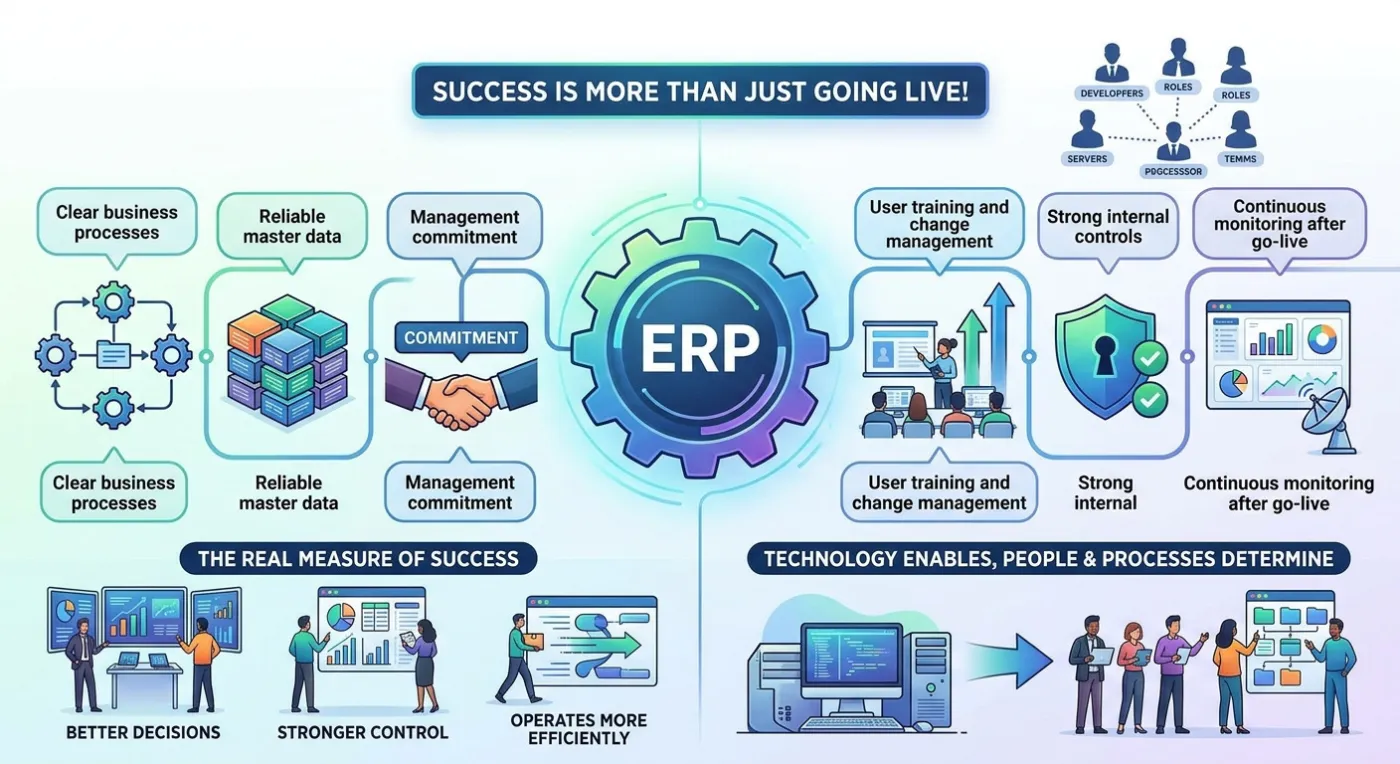
ERP Implementation Is Not an IT Project. It Is a Business Transformation
Going live is not the goal—business transformation is. A truly successful ERP implementation isn’t defined by software installation, but by clear processes, reliable data, and driving smarter decision-making across the organization.
ERP & Business Applications
· 7 min read
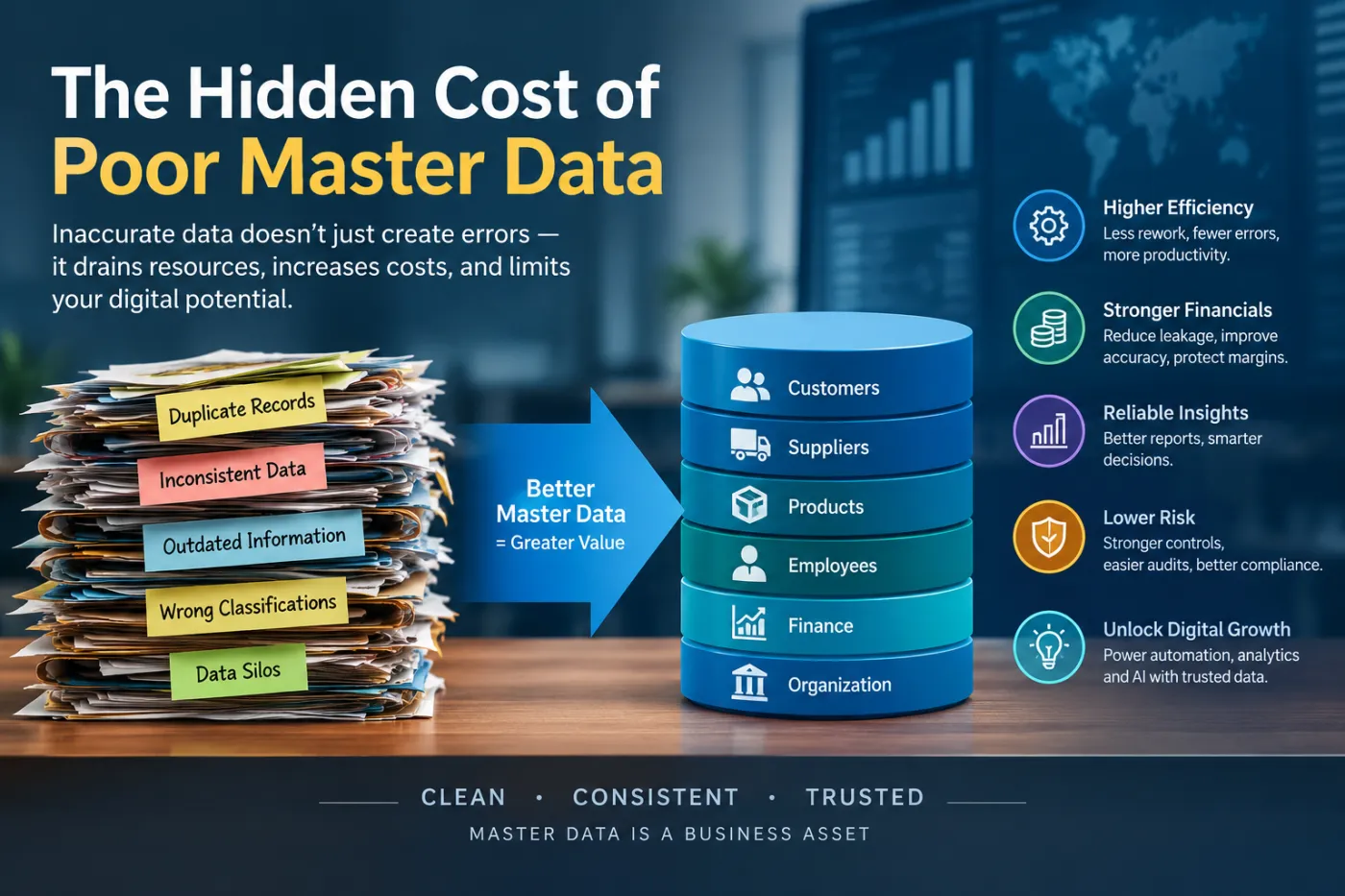
The Hidden Cost of Poor Master Data: Why Data Quality Is a Business Priority
Technology cannot deliver its full potential when the data behind it is unreliable. From ERP performance to AI-driven insights, poor master data creates hidden risks that affect profitability, compliance, and strategic decisions. For today's IT leaders, establishing data ownership, governance, and quality standards is not optional—it is a business imperative.
ERP & Business Applications