
Automation Should Eliminate Business Friction, Not Just Manual Work
Automation is not just about reducing manual tasks; it is about eliminating the bottlenecks, unnecessary approvals, disconnected systems, and operational complexities that slow businesses down. True automation simplifies processes, connects people and technology, and enables organizations to focus on meaningful business outcomes rather than administrative activities.
· 6 min read
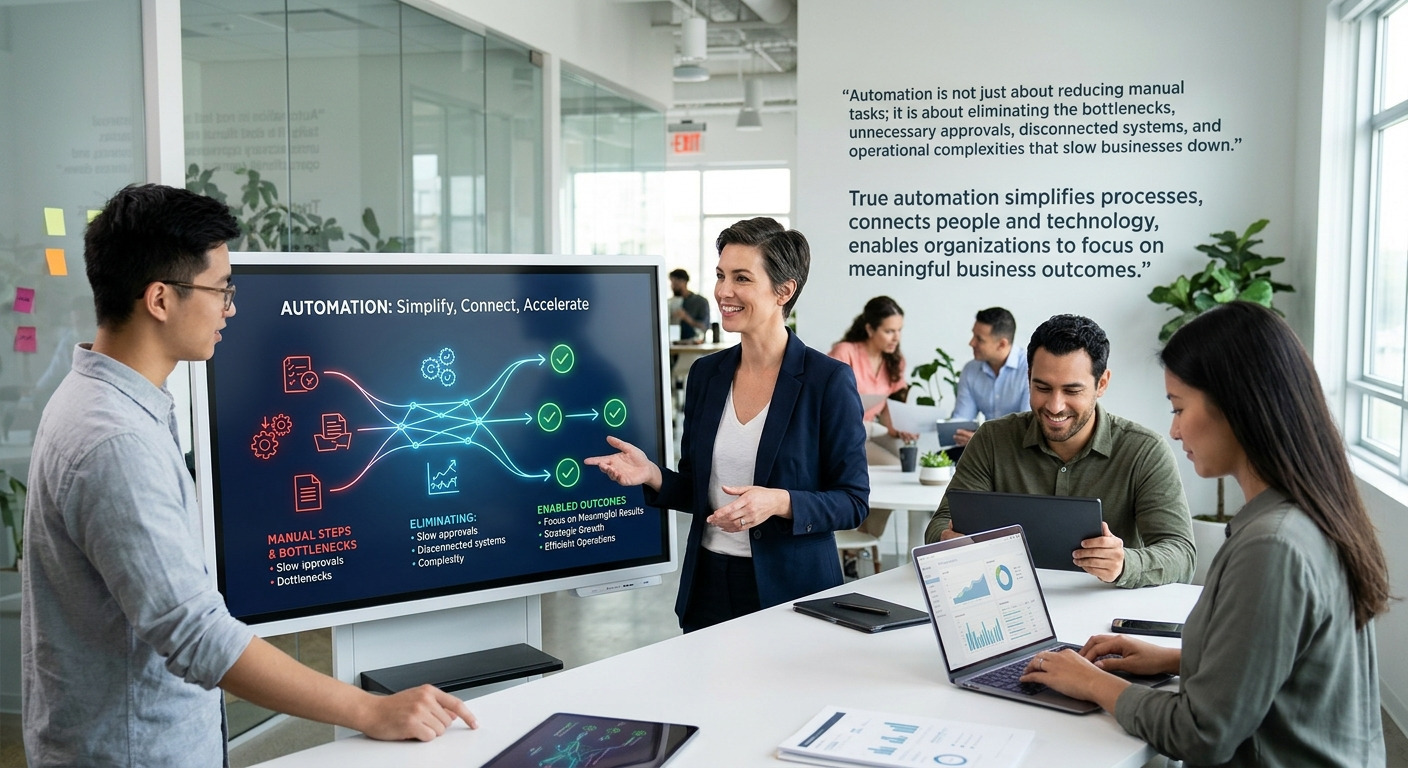
In today's digital business environment, organizations often measure automation by how many manual tasks they can eliminate. Businesses invest in workflow automation, ERP systems, approval platforms, and digital tools to reduce repetitive activities and improve operational efficiency.
However, there is a bigger opportunity that many organizations overlook.
The real purpose of automation should not simply be to replace manual work. It should be to eliminate the friction that prevents businesses from moving forward.
A process can be fully automated and still remain inefficient. If employees must wait for unnecessary approvals, enter the same information into multiple systems, resolve inconsistent data, or navigate complicated workflows, automation has only digitized the problem rather than solved it.
Automation Is More Than Replacing Manual Tasks
Consider a traditional procurement process.
An employee raises a purchase requisition, sends it for approval, follows up with multiple departments, waits for budget confirmation, and eventually receives purchase authorization. Even after implementing an automated approval system, the process may still involve unnecessary approval layers, unclear responsibilities, and avoidable delays.
The workflow is now digital, but the business friction remains.
A better approach starts by examining the entire process:
-
Are all approval levels genuinely necessary?
-
Can budget availability be validated automatically?
-
Can the system identify the appropriate approver?
-
Can stakeholders receive timely notifications?
-
Can exceptions be handled without delaying the entire process?
-
Can management monitor the process through real-time dashboards?
When automation addresses these questions, it becomes a business improvement initiative rather than simply an IT implementation.
Identify Friction Before Automating
One of the biggest mistakes organizations make is automating existing processes without questioning whether those processes are still necessary.
An inefficient process does not become efficient simply because it runs through software.
Before introducing automation, organizations should identify common sources of business friction:
1. Process bottlenecks
Unnecessary approval layers, departmental dependencies, and unclear ownership can significantly slow down business operations.
2. Information silos
When departments maintain separate records and disconnected systems, employees spend valuable time collecting, reconciling, and verifying information.
3. Repetitive data entry
Entering the same information across multiple applications increases administrative effort and creates opportunities for errors.
4. Delayed communication
Manual follow-ups, email dependency, and a lack of real-time notifications make even simple business activities unnecessarily complicated.
5. Lack of visibility
Without centralized dashboards and transparent workflows, managers struggle to identify delays, understand accountability, and make timely decisions.
Automation should address these underlying challenges instead of merely transferring existing activities into a digital environment.
Connected Systems Create Better Business Experiences
Modern organizations rarely operate through a single application. They depend on ERP platforms, HRMS, financial systems, inventory applications, CRM solutions, and various operational tools.
The real value of automation emerges when these systems work together.
For example, when an employee submits a leave application, the system should automatically validate leave balances, route the request to the appropriate manager, update attendance records after approval, and make the information available to payroll.
Similarly, an integrated procurement process should connect requisitions, budgets, approvals, purchase orders, inventory, and financial records.
Employees should not have to act as human bridges between disconnected applications.
A well-designed automation ecosystem allows information to move seamlessly across departments while maintaining appropriate controls, accountability, and visibility.
Automation Should Empower People, Not Complicate Their Work
Technology should make employees more productive, not force them to spend more time interacting with technology.
Poorly designed automation can introduce additional notifications, complicated forms, unnecessary system dependencies, and confusing approval procedures.
This often creates frustration rather than efficiency.
Successful automation should provide:
-
Simple and intuitive user experiences.
-
Clear responsibilities and approval ownership.
-
Automated notifications and reminders.
-
Fewer unnecessary steps and repetitive activities.
-
Easy access to accurate and relevant information.
-
Appropriate flexibility for exceptional business situations.
The objective is to allow employees to focus on analysis, decision-making, customer relationships, and activities that create genuine business value.
Automation should remove administrative burdens so people can concentrate on work that requires human judgment.
Measure Business Outcomes, Not Automation Volume
Organizations often celebrate the number of automated workflows, digital applications, or processes implemented.
However, these numbers do not necessarily reflect meaningful business improvements.
A more effective approach is to measure automation through business outcomes.
Consider the following performance indicators:
|
Performance indicator |
What it measures |
|---|---|
|
Process completion time |
How quickly a workflow is completed |
|
Approval turnaround time |
How long decisions take |
|
Error and rework rate |
Reduction in operational mistakes |
|
Data duplication |
Improvement in information consistency |
|
Employee productivity |
Time saved on repetitive activities |
|
Process visibility |
Ability to track activities and bottlenecks |
|
Customer response time |
Improvement in service delivery |
For example, reducing a procurement approval cycle from five days to one day represents a measurable business improvement. Eliminating duplicate data entry across departments creates operational value. Reducing unnecessary follow-ups allows employees to focus on more important responsibilities.
These are the outcomes that demonstrate the real return on automation investment.
The Role of IT Leadership in Business Automation
Business automation should never be treated as an isolated technology project.
It requires collaboration between IT, finance, HR, operations, procurement, and business leadership.
IT leaders must understand how the organization actually operates, identify inefficiencies, challenge unnecessary complexity, and design technology solutions around business requirements.
This also means knowing when not to automate.
Some processes need simplification before automation. Others require better data governance, clearer policies, or organizational restructuring. Automating a broken process can make its inefficiencies faster, more consistent, and harder to correct.
The responsibility of technology leadership is to ensure that automation supports business objectives rather than creating another layer of operational complexity.
Moving Towards Intelligent Business Operations
The next generation of business automation will go beyond predefined workflows and rule-based approvals.
Artificial intelligence, intelligent document processing, predictive analytics, and AI-powered agents are creating opportunities to identify exceptions, analyze operational patterns, recommend decisions, and coordinate activities across multiple systems.
Imagine an intelligent procurement platform that identifies unusual purchasing patterns, predicts potential stock shortages, recommends alternative suppliers, and alerts management before an operational issue occurs.
This is not simply about reducing manual intervention. It is about enabling organizations to become more proactive, responsive, and intelligent.
However, intelligent automation must still operate within appropriate governance frameworks, security controls, and human oversight.
Technology should improve decision-making, not eliminate accountability.
Final Thoughts
Automation is not successful because an organization has fewer manual tasks. It is successful when people can accomplish meaningful work with less complexity, fewer delays, better information, and greater confidence.
The question for business leaders should not simply be:
How many tasks can we automate?
It should be:
How much unnecessary friction can we remove from the way our business operates?
Because the greatest value of automation is not replacing human effort. It is creating an environment where people, processes, and technology work together without unnecessary obstacles.
Don't just automate the work. Eliminate the friction behind the work.
- ERP
- DigitalTransformation
- ITLeadership
- BusinessAutomation
- BusinessProcessAutomation
- OperationalExcellence
- EnterpriseTechnology
- ProcessOptimization
- AutomationStrategy
- DigitalLeadership
Share
Keep reading
Related articles
· 1 min read
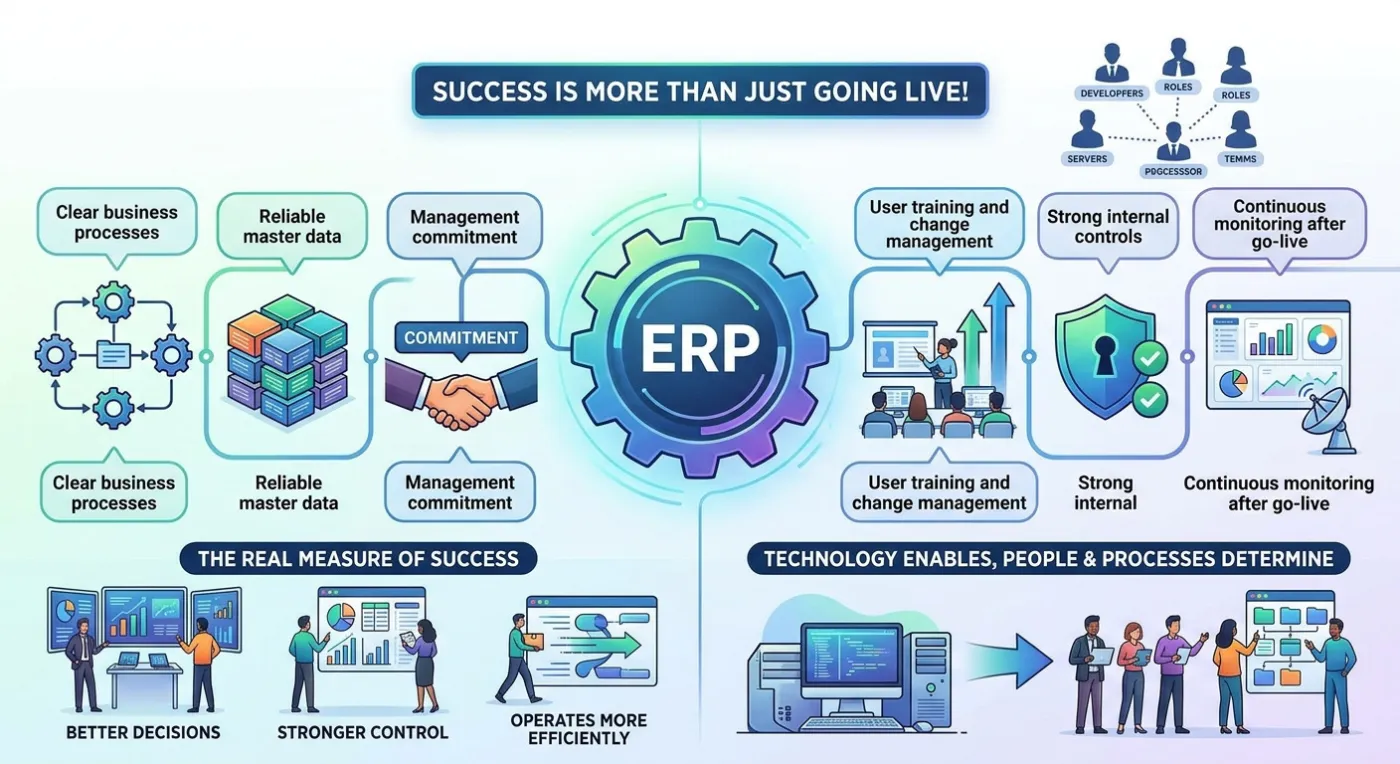
ERP Implementation Is Not an IT Project. It Is a Business Transformation
Going live is not the goal—business transformation is. A truly successful ERP implementation isn’t defined by software installation, but by clear processes, reliable data, and driving smarter decision-making across the organization.
ERP & Business Applications
· 1 min read
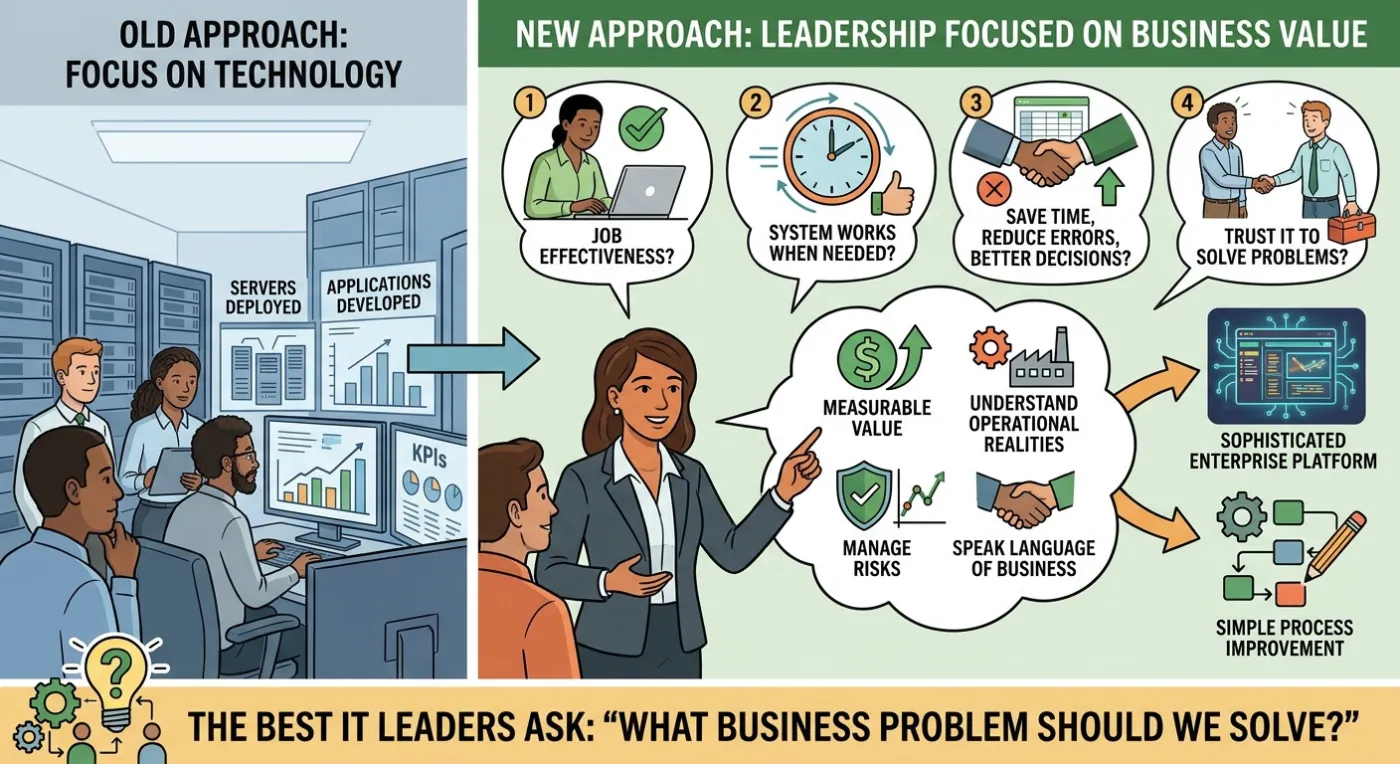
Managing IT in a Non-Technical Organization Requires a Different Kind of Leadership
When technology is not the company's core business, employees don't measure IT success by the number of servers deployed or applications developed. They measure it by something much simpler: Can they do their jobs effectively? Does the system work when they need it? Does technology help them save time, reduce errors, and make better decisions? Can they trust IT to solve problems?
IT leadership
· 2 min read
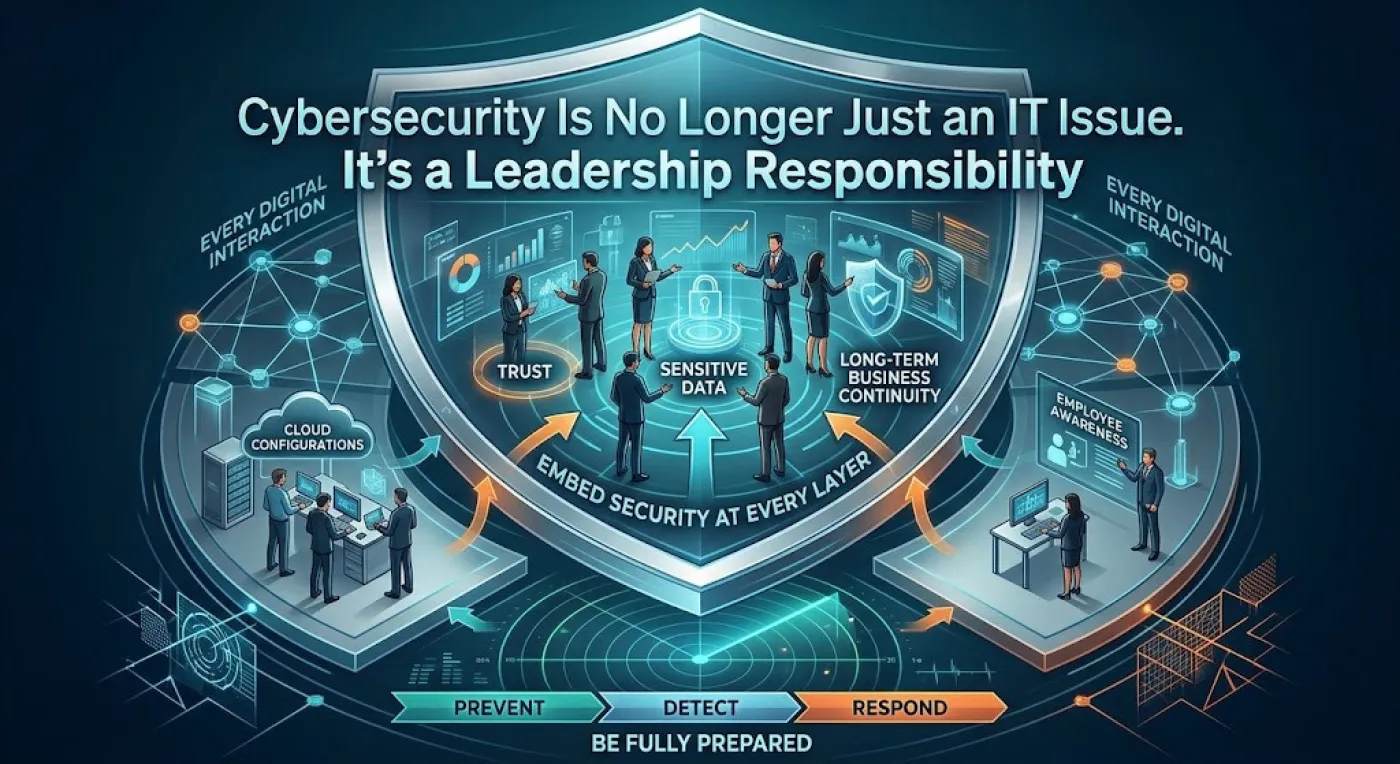
Cybersecurity Is No Longer Just an IT Issue. It’s a Leadership Responsibility
For modern organizations, cybersecurity is no longer just about keeping systems operational—it is about protecting trust, sensitive data, and long-term business continuity. Because every digital interaction introduces potential privacy risks, enterprises must embed security into every layer of their operations, from cloud configurations to employee awareness. The fundamental challenge for IT leaders is not predicting if a cyber threat will occur, but ensuring the organization is fully prepared to prevent, detect, and respond when it does.
Cybersecurity & Governance