Managing IT in a Non-Technical Organization Requires a Different Kind of Leadership
When technology is not the company's core business, employees don't measure IT success by the number of servers deployed or applications developed. They measure it by something much simpler: Can they do their jobs effectively? Does the system work when they need it? Does technology help them save time, reduce errors, and make better decisions? Can they trust IT to solve problems?
· 1 min read
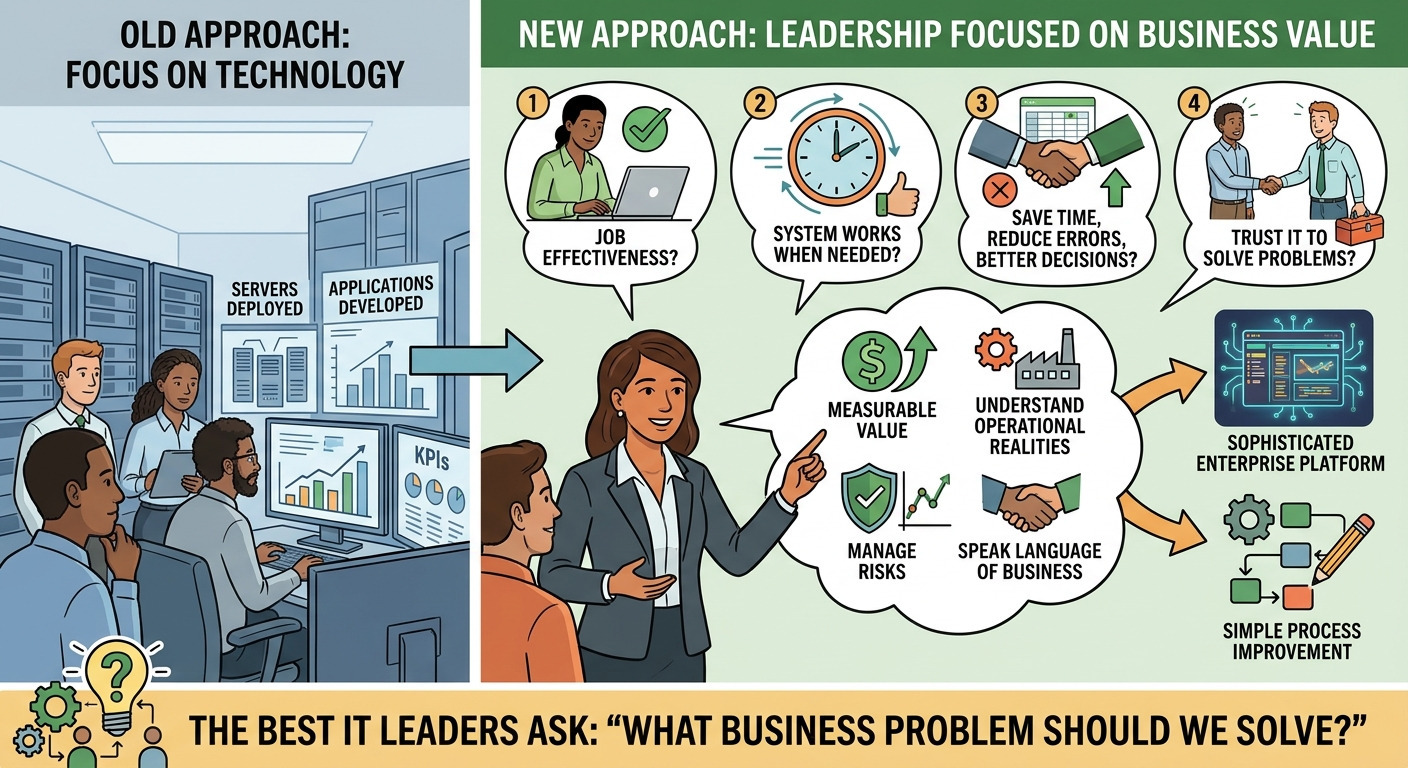
When technology is not the company's core business, employees don't measure IT success by the number of servers deployed or applications developed.
They measure it by something much simpler:
Can they do their jobs effectively?
Does the system work when they need it?
Does technology help them save time, reduce errors, and make better decisions?
Can they trust IT to solve problems?
This changes how we should lead an IT function.
We must speak the language of business, understand operational realities, manage risks, and demonstrate measurable value.
Sometimes, the right solution is a sophisticated enterprise platform.
Other times, it is a simple process improvement that eliminates unnecessary work.
The best IT leaders don't ask, "What technology can we introduce?" They ask, "What business problem should we solve?"
Share
Keep reading
Related articles

· 1 min read
Leadership Is Not About Knowing Everything
True IT leadership isn’t about being the smartest person in the room or having every technical answer. It’s about asking the right questions, bridging the gap between technology and business strategy, and empowering team members to solve complex challenges independently. Real impact comes from taking accountability, sharing credit, and building resilient teams that thrive on continuous learning and ownership.
IT leadership
· 1 min read
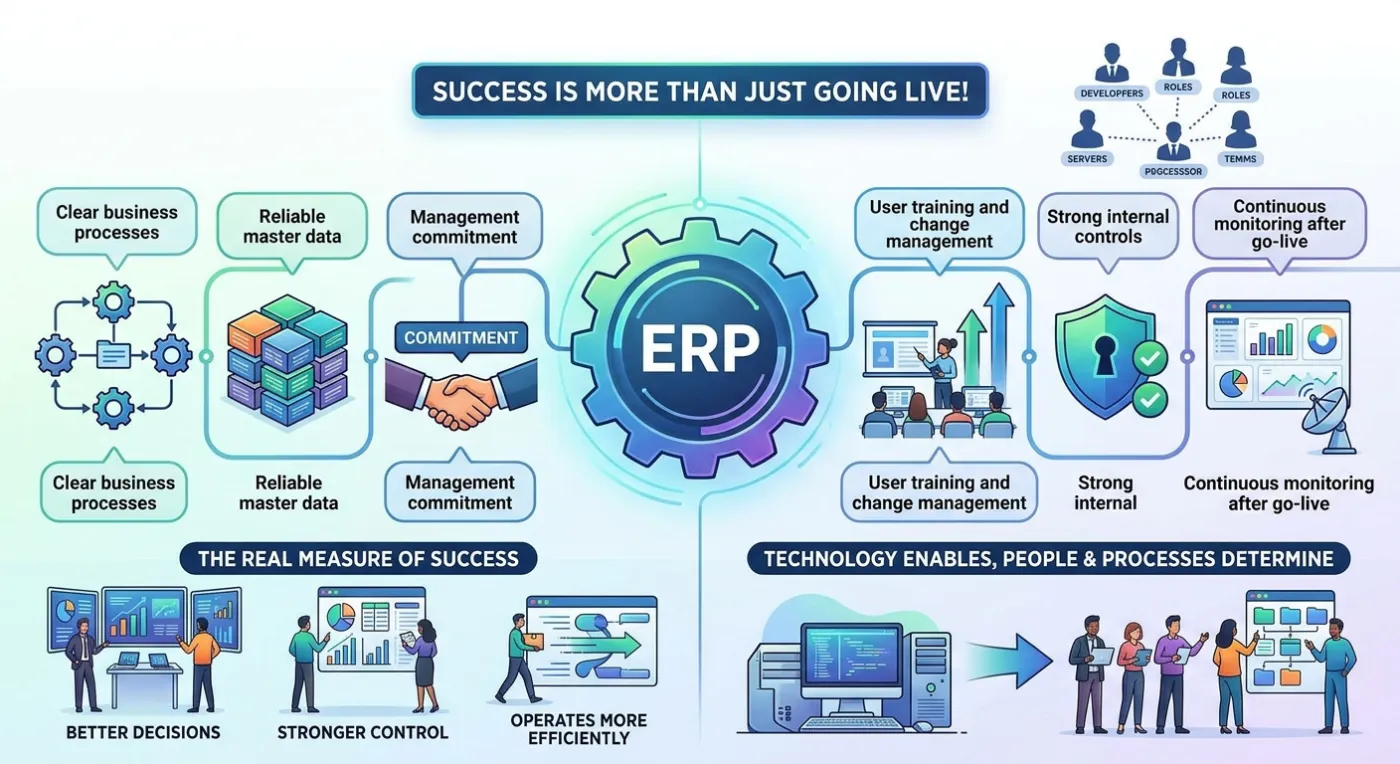
ERP Implementation Is Not an IT Project. It Is a Business Transformation
Going live is not the goal—business transformation is. A truly successful ERP implementation isn’t defined by software installation, but by clear processes, reliable data, and driving smarter decision-making across the organization.
ERP & Business Applications
· 1 min read
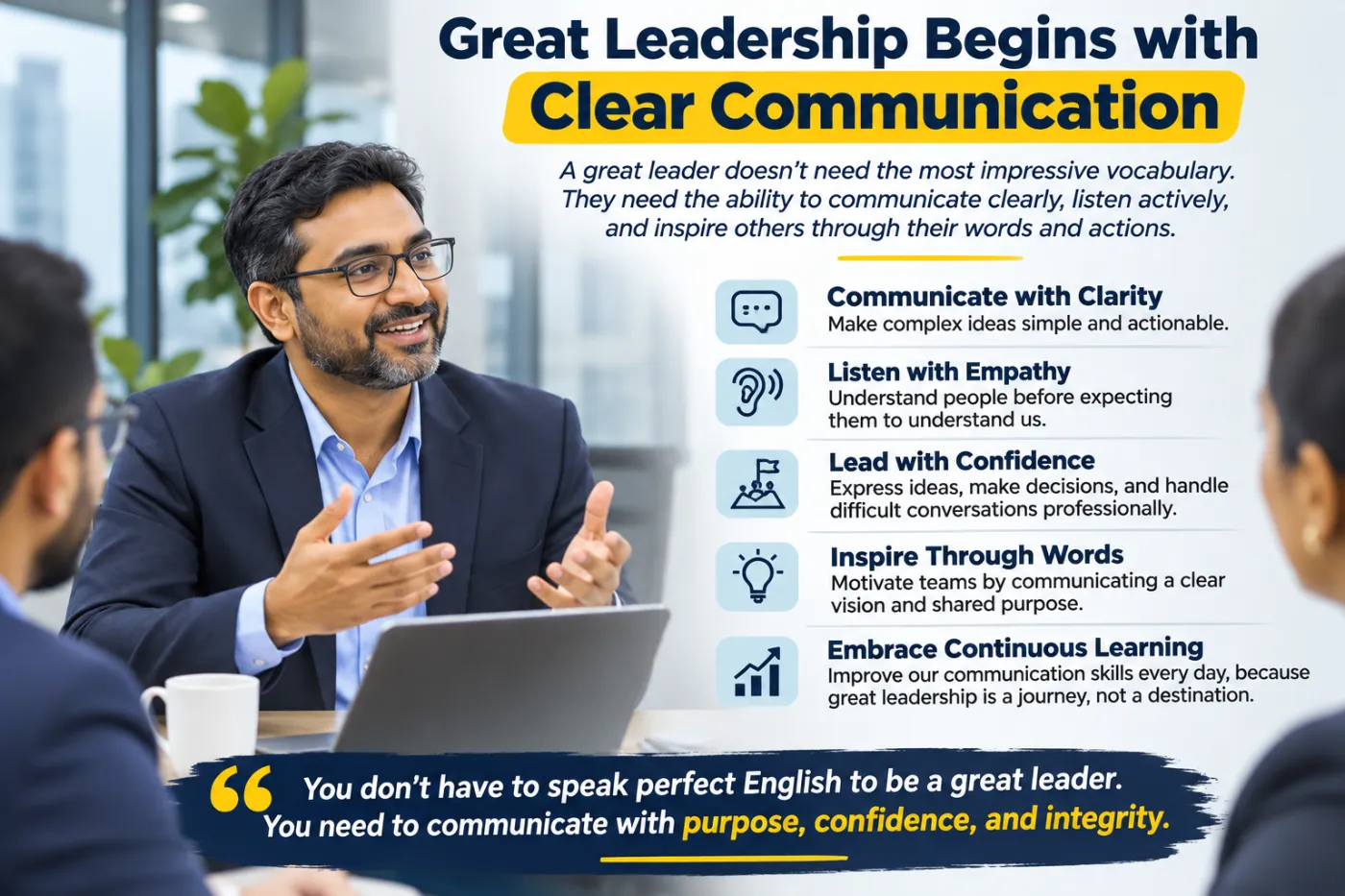
Great Leadership Begins with Clear Communication
Great leadership begins with clear communication. Discover how clarity, empathy, confidence, and continuous learning help leaders inspire teams and build stronger professional relationships.
IT leadership