
Technology Leadership Starts with Understanding People
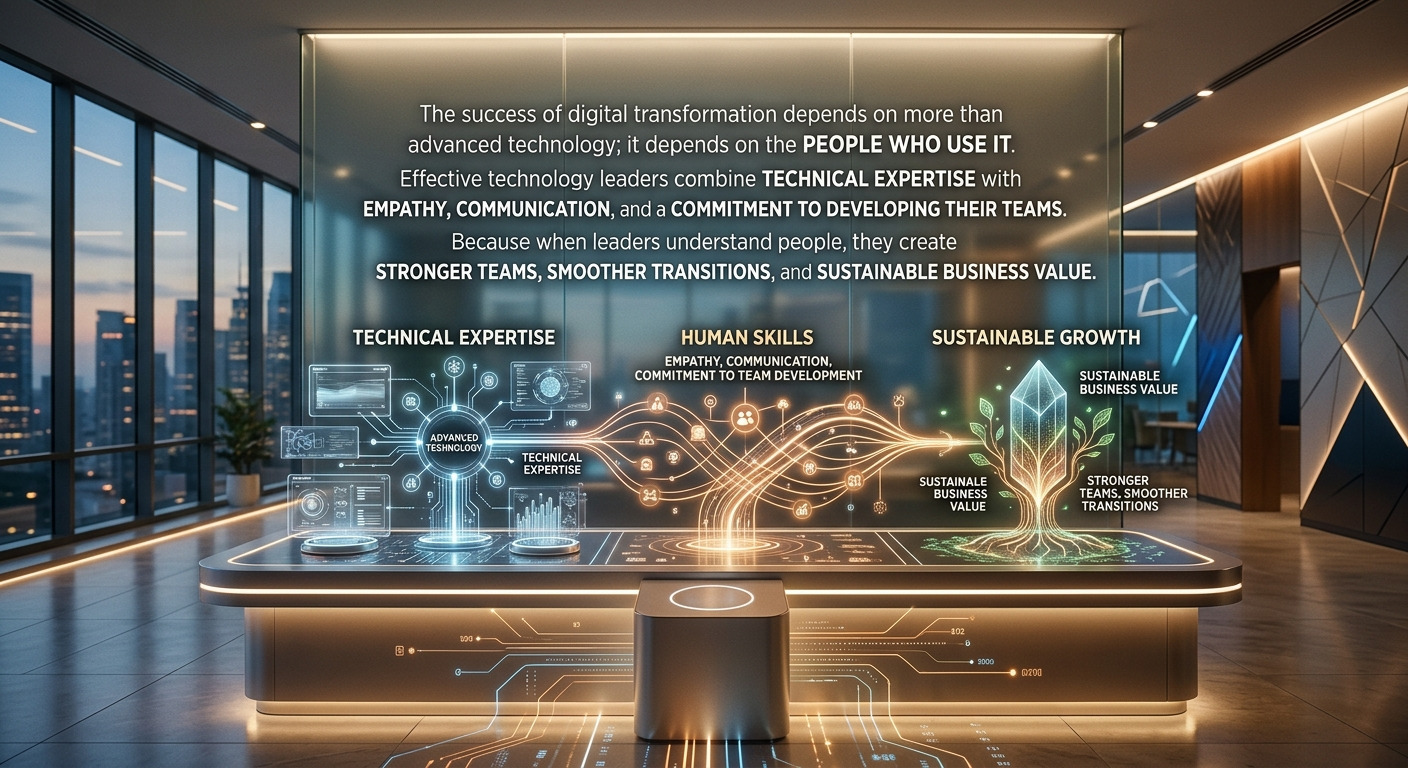
The success of digital transformation depends on more than advanced technology; it depends on the people who use it. Effective technology leaders combine technical expertise with empathy, communication, and a commitment to developing their teams. Because when leaders understand people, they create stronger teams, smoother transitions, and sustainable business value.
· 6 min read
In today’s rapidly evolving digital landscape, technology leadership is often associated with innovation, automation, cybersecurity, artificial intelligence, and digital transformation. While these capabilities are essential, the most effective technology leaders understand a fundamental truth: technology creates value only when it works for people.
Behind every system, application, and digital initiative are individuals who must understand it, adopt it, and use it to achieve meaningful outcomes. That is why successful technology leadership begins not with technology itself, but with understanding people.
Technology Is the Solution, but People Define the Problem
One of the most common mistakes in technology leadership is selecting a solution before fully understanding the problem.
A new enterprise application may offer advanced features, but if it does not address employees’ actual challenges, it can create frustration rather than productivity. An automated workflow may reduce processing time, yet fail if it ignores how teams collaborate or make decisions.
Effective technology leaders take time to listen before they act. They engage with business stakeholders, understand operational difficulties, observe existing processes, and identify the real reasons behind inefficiencies.
Instead of asking, “What technology should we implement?” they begin with a more meaningful question: “What problem are our people trying to solve?”
This shift in perspective helps organizations invest in solutions that deliver measurable business value rather than simply introducing new technology.
Empathy Is a Leadership Strength
Technology teams work in complex environments where business priorities, technical constraints, deadlines, and user expectations frequently compete.
In such situations, technical expertise alone is not enough. Leaders must understand the pressures their teams face, recognize individual strengths, and appreciate the different perspectives people bring to a problem.
Empathy does not mean lowering standards or avoiding difficult decisions. It means making decisions with a clear understanding of their impact on people.
When team members feel heard and respected, they are more likely to communicate openly, share ideas, identify risks early, and take responsibility for outcomes.
A leader who understands people can build trust. And trust is one of the most valuable foundations of a high-performing technology organization.
Change Management Is About People, Not Just Systems
Digital transformation is rarely successful simply because a new system has been deployed. Its real success depends on whether people adopt new ways of working.
Employees may resist a new application because they fear losing control, lack confidence in their digital skills, or do not understand how the change will benefit them. What appears to be resistance may actually be uncertainty, insufficient training, or a lack of communication.
Effective technology leaders recognize these concerns instead of immediately labeling them as negative attitudes.
They communicate the purpose behind change, involve users early, provide appropriate training, and create opportunities for feedback. Most importantly, they help employees understand how technology can make their work easier, safer, and more productive.
Technology implementation is a technical milestone; successful adoption is a leadership achievement.
Build Teams That Feel Empowered, Not Controlled
Great technology leaders do not attempt to make every decision or control every task. They create an environment where capable people can think independently, experiment responsibly, and contribute their expertise.
This requires understanding individual capabilities, career aspirations, working styles, and development needs.
Some team members thrive when given complex technical challenges. Others excel at stakeholder communication, system analysis, project coordination, or mentoring colleagues. Recognizing these differences enables leaders to assign responsibilities more effectively and build stronger teams.
Empowerment also requires accountability. Clear expectations, shared objectives, constructive feedback, and appropriate decision-making authority help people take ownership of their work.
When leaders invest in their teams, they develop more than technical capabilities. They cultivate confidence, collaboration, innovation, and future leadership.
Communication Connects Technology with Business Value
Technology leaders frequently operate between two different worlds: technical teams focused on implementation and business leaders focused on outcomes.
The ability to translate between these perspectives is essential.
Business stakeholders need to understand how a technology investment will improve efficiency, reduce risk, strengthen controls, enhance customer experience, or support strategic growth. Technical teams need clarity about business priorities, expected outcomes, and operational constraints.
Strong communication creates alignment between these groups. It replaces assumptions with shared understanding and helps everyone work toward common objectives.
The best technology leaders do not simply explain what a system does. They explain why it matters, whom it serves, and what meaningful success looks like.
Measure Success Beyond Technical Performance
System availability, response time, security controls, project delivery, and infrastructure reliability are important measures of technology performance. However, they do not tell the complete story.
A system can meet every technical specification and still fail to improve the business.
Technology leaders should also evaluate whether employees can complete tasks more easily, whether processes have become more efficient, whether collaboration has improved, and whether users trust the systems they depend on.
These human and operational outcomes provide a more complete picture of technology's contribution to the organization.
Ultimately, technology performance should be measured not only by what the system can do, but also by what people can accomplish because of it.
The Future Belongs to People-Centered Technology Leaders
As artificial intelligence, automation, and intelligent systems continue to transform the workplace, the human dimension of leadership will become even more important.
Technical knowledge will remain valuable, but the ability to build trust, manage change, communicate clearly, resolve conflict, and develop talent will increasingly distinguish exceptional leaders.
Technology will continue to evolve. Tools will change, platforms will be replaced, and new capabilities will emerge. Yet organizations will always depend on people to identify meaningful problems, make responsible decisions, collaborate effectively, and turn innovation into lasting value.
The strongest technology leaders understand this balance. They embrace innovation without losing sight of human needs. They pursue efficiency without overlooking employee experience. And they make strategic decisions with both business outcomes and people in mind.
Final Thoughts
Technology leadership is not simply about managing infrastructure, implementing software, or adopting the latest innovations. It is about helping people work better, make better decisions, and achieve outcomes that would otherwise be difficult to accomplish.
Before introducing a new system, understand the people who will use it. Before changing a process, understand the challenges behind it. Before building a high-performing team, understand the individuals who make it possible.
Because the most successful technology transformations do not begin with code, systems, or strategies. They begin with people.
And the most effective technology leaders never forget it.
Share
Keep reading
Related articles
· 1 min read
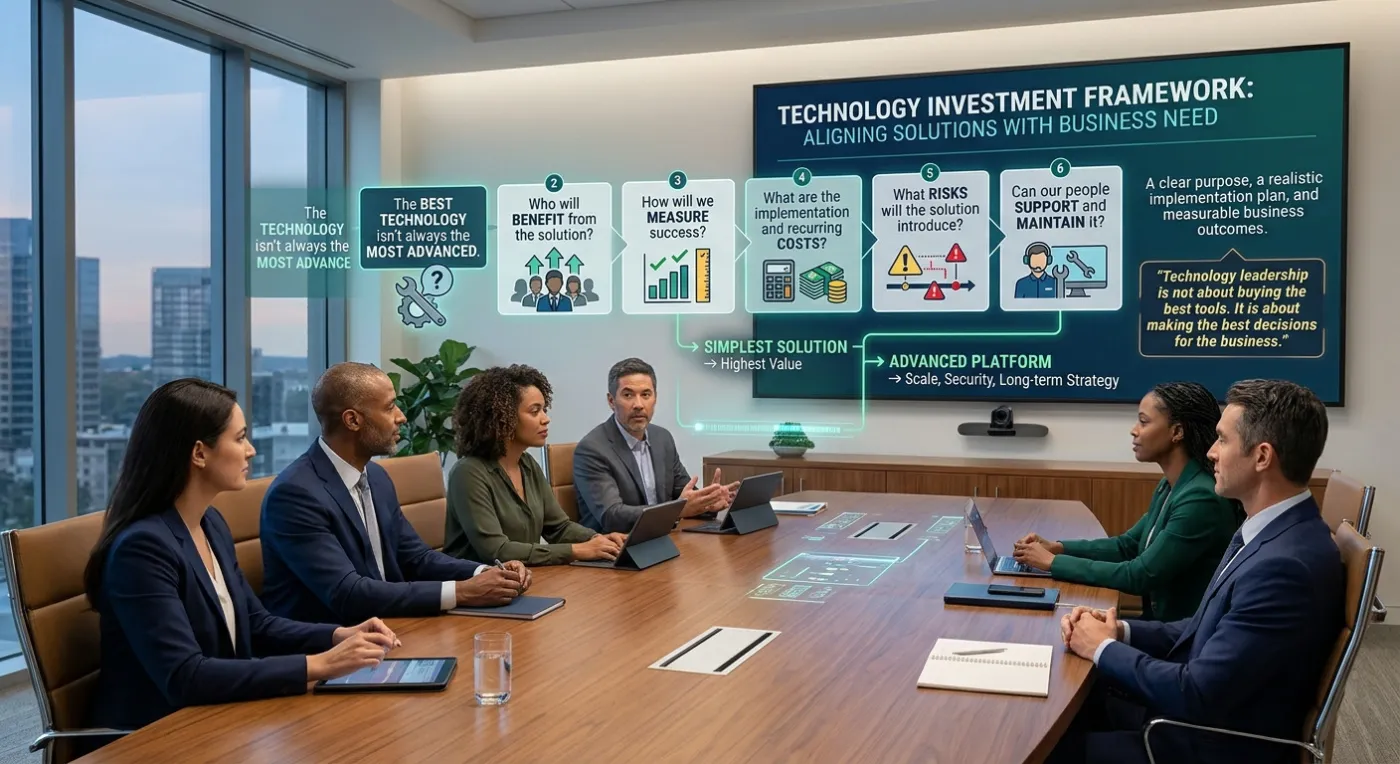
The business case matters more than the technology
Technology leadership is not about buying the best tools—it is about making the best decisions for the business. An impressive solution can still be a poor investment if it lacks a clear purpose, a realistic implementation plan, and measurable outcomes. Whether adopting a simple tool or an advanced platform, IT investments must be driven strictly by business needs, organizational readiness, and value delivery—not product popularity.
IT leadership
· 1 min read
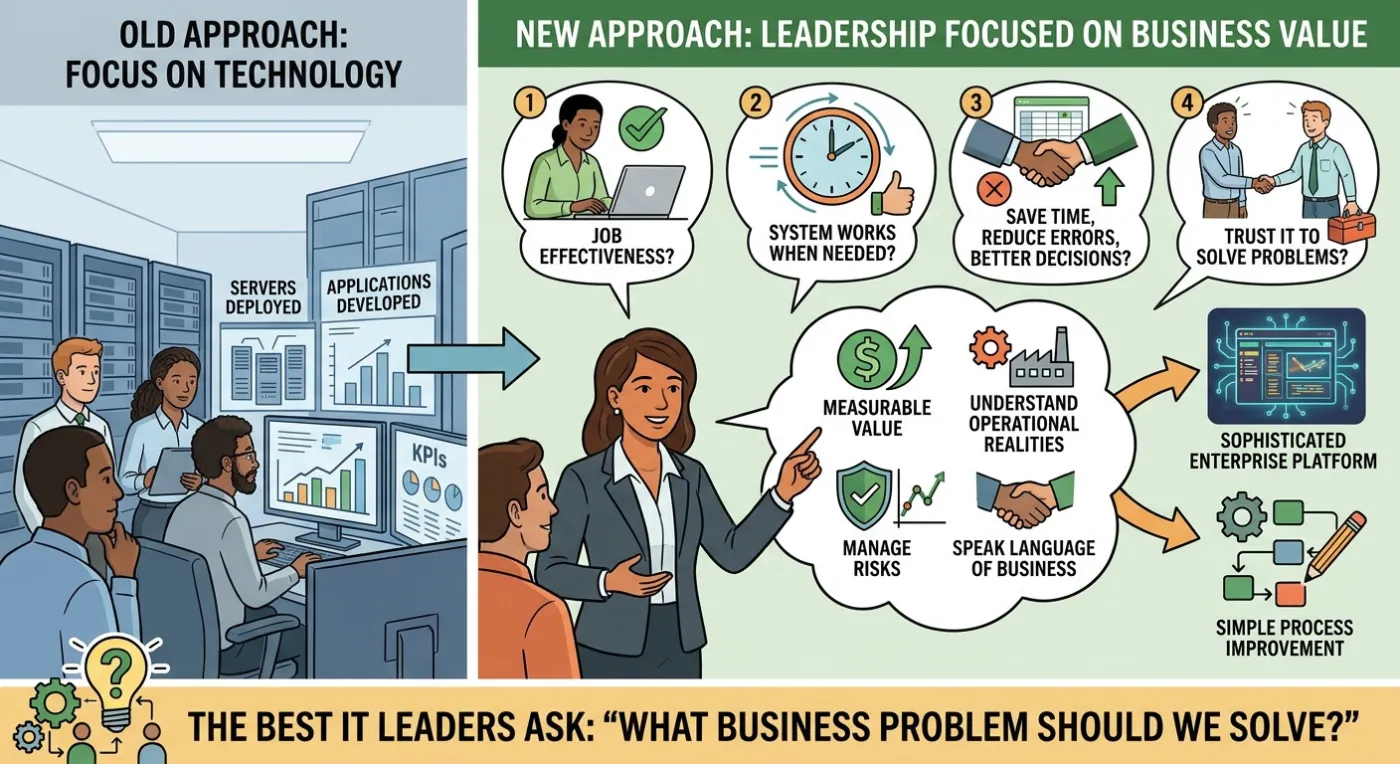
Managing IT in a Non-Technical Organization Requires a Different Kind of Leadership
When technology is not the company's core business, employees don't measure IT success by the number of servers deployed or applications developed. They measure it by something much simpler: Can they do their jobs effectively? Does the system work when they need it? Does technology help them save time, reduce errors, and make better decisions? Can they trust IT to solve problems?
IT leadership

· 1 min read
Leadership Is Not About Knowing Everything
True IT leadership isn’t about being the smartest person in the room or having every technical answer. It’s about asking the right questions, bridging the gap between technology and business strategy, and empowering team members to solve complex challenges independently. Real impact comes from taking accountability, sharing credit, and building resilient teams that thrive on continuous learning and ownership.
IT leadership