
Leading IT Without Losing the Craft
Why senior IT leaders who keep building earn better decisions, and where hands-on work stops helping.
· 3 min read
After more than twenty years in IT, I still write code. Some colleagues find that odd for a Head of IT. I think it is one of the more useful habits I have kept.
The usual career path pushes technologists away from the work. You move from developer to lead, then manager, then head of department, and each step swaps keyboards for calendars. That shift is necessary. A leader who stays in the code is a bottleneck. But a leader who loses touch with the work makes decisions on slide decks and vendor promises, and that is where expensive mistakes begin.
What hands-on actually buys you
Staying close to the craft does not mean owning tickets. It means keeping enough current skill to do three things well.
Judge estimates honestly. When a team says a feature takes six weeks, I should know whether that sounds right. Without that instinct, you either accept every number or cut every number, and both erode trust.
Evaluate vendors on substance. A demo is a performance. Someone who has built integrations asks about API limits, data migration paths, and upgrade behavior, which is where projects succeed or fail.
Earn credibility. Engineers follow leaders who understand their problems. When I can read a pull request or sketch a schema, the conversation about priorities changes.
Where hands-on work goes wrong
There is a real risk in building too much. I follow three rules.
- Never put yourself on the critical path. If the project stalls when I am in a meeting, I have taken a job from someone else. I build internal tools and prototypes, not the system the business depends on this quarter.
- Build to learn, then hand over. A prototype proves a point or tests a technology. Once it works, someone on the team owns it.
- Do not override the team's design. My opinion is one input. If I want a particular approach, I make the case like anyone else.
The leadership work that cannot be delegated
Hands-on skill supports the job, but the job itself is different. In a multi-location organization, the leadership work looks like this:
- Translating between IT and the business. Finance, operations, and HR leaders do not need to know what a queue worker is. They need to know what a delay costs them and what choices they have.
- Setting a small number of priorities. IT teams are always oversubscribed. The most useful thing a leader does is say what we are not doing this quarter.
- Building people. My success is measured by how well the team performs when I am absent.
- Owning risk. Security, continuity, and compliance belong at leadership level, because no individual developer can trade them off against delivery pressure.
A practical test
I ask myself one question each quarter: could I explain our three most important systems to a new hire, including how they fail? If the answer is no, I have drifted too far from the work. If I am the only one who can explain them, I have built a dependency.
Closing thought
Good IT leadership is not a choice between technical depth and management skill. The leaders I respect most have both, and they know which one a given moment calls for. Keep enough craft to stay honest, and enough distance to stay useful.
Share
Keep reading
Related articles
· 1 min read
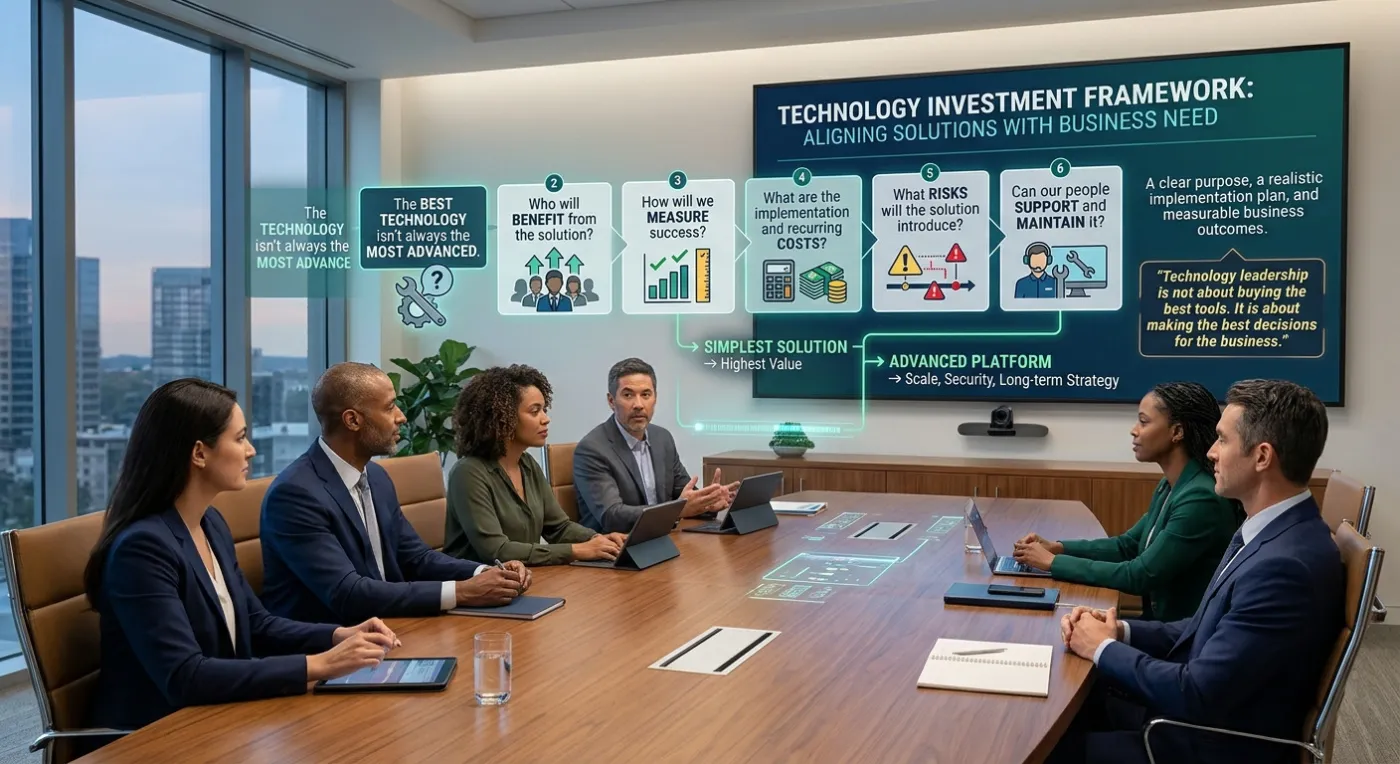
The business case matters more than the technology
Technology leadership is not about buying the best tools—it is about making the best decisions for the business. An impressive solution can still be a poor investment if it lacks a clear purpose, a realistic implementation plan, and measurable outcomes. Whether adopting a simple tool or an advanced platform, IT investments must be driven strictly by business needs, organizational readiness, and value delivery—not product popularity.
IT leadership
· 1 min read
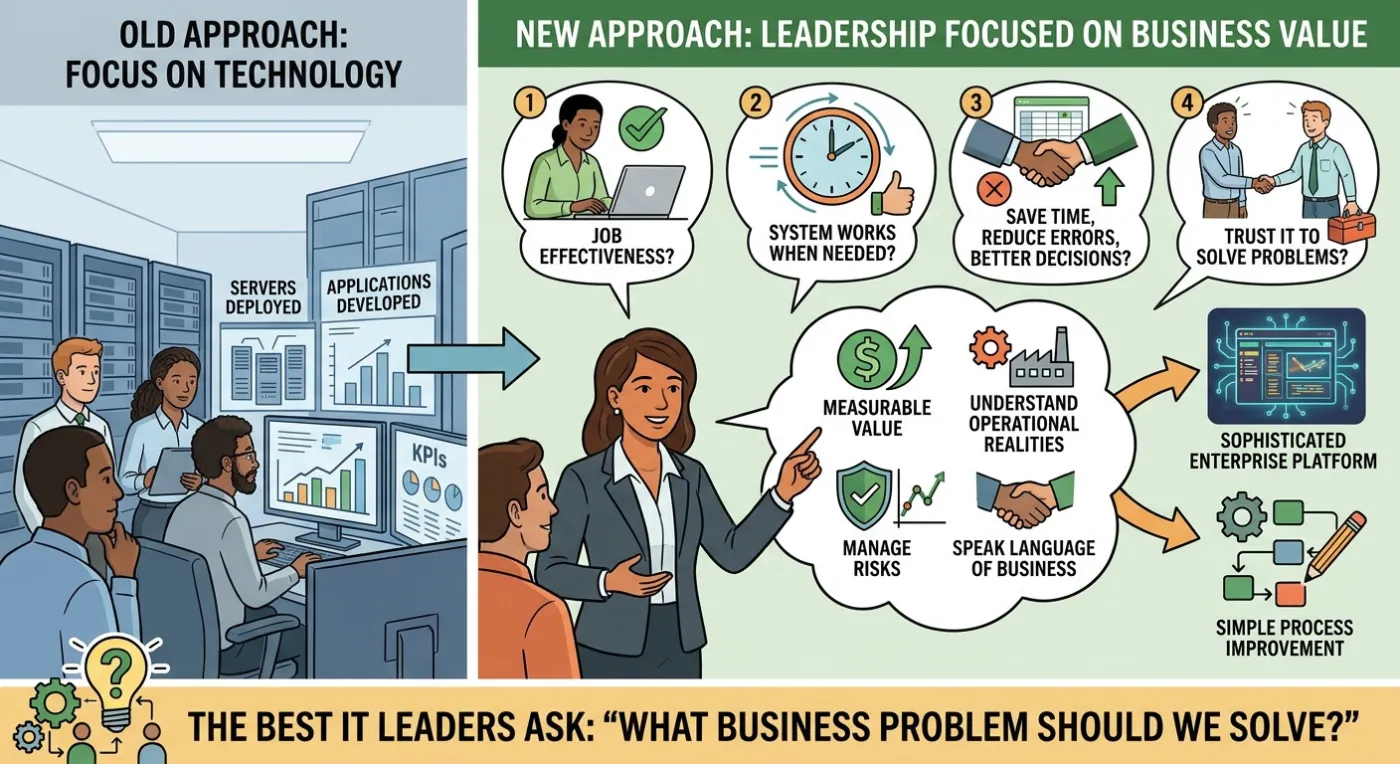
Managing IT in a Non-Technical Organization Requires a Different Kind of Leadership
When technology is not the company's core business, employees don't measure IT success by the number of servers deployed or applications developed. They measure it by something much simpler: Can they do their jobs effectively? Does the system work when they need it? Does technology help them save time, reduce errors, and make better decisions? Can they trust IT to solve problems?
IT leadership

· 1 min read
Leadership Is Not About Knowing Everything
True IT leadership isn’t about being the smartest person in the room or having every technical answer. It’s about asking the right questions, bridging the gap between technology and business strategy, and empowering team members to solve complex challenges independently. Real impact comes from taking accountability, sharing credit, and building resilient teams that thrive on continuous learning and ownership.
IT leadership