
Digital Transformation Is Mostly a People Problem
Lessons from running transformation across many business units: sequence, ownership and adoption matter more than technology.
· 3 min read
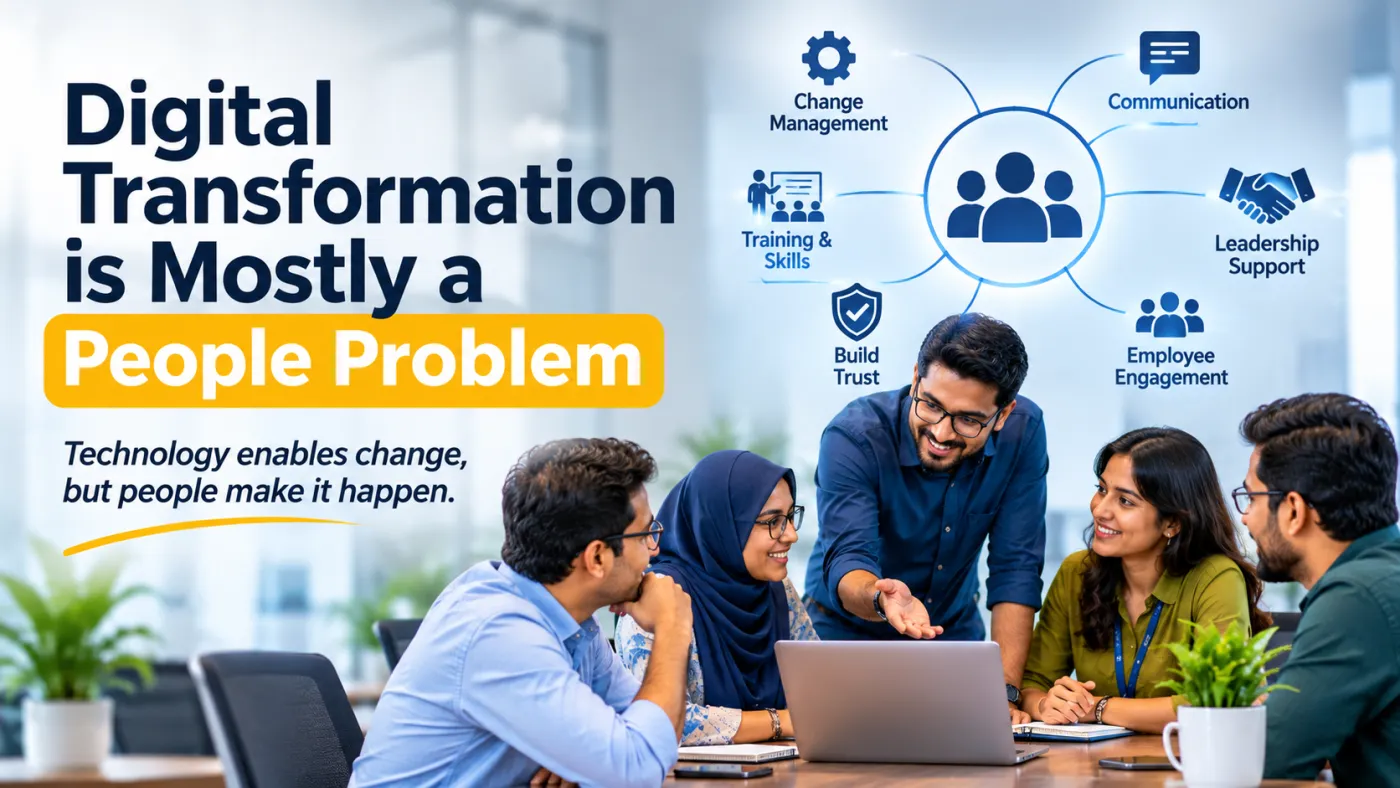
The phrase "digital transformation" has been stretched to cover almost anything with a screen. In practice, the organizations I have seen succeed treat it as a change to how work is done, with technology as the enabler.
I have worked on transformation in a traditional, geographically spread business with many entities and sites. That setting teaches humility quickly. Processes differ by location, local habits are strong, and a system that looks perfect in the head office can fail at the estate or factory floor.
Start with the process, not the platform
The most common mistake is buying software and then asking people to fit it. A better order is:
- Map how work really happens. Not the policy manual, but what people do on a normal Tuesday.
- Decide what should change. Some steps exist only because the old system needed them. Remove them.
- Choose technology that supports the redesigned process.
- Pilot, adjust, then scale.
Skipping step one means you automate waste and call it progress.
Three things that decide the outcome
Executive ownership. A transformation without a senior business sponsor becomes an IT project, and IT projects get deprioritized when operations are busy. The sponsor must be someone who answers for the business result, not only for the budget.
Data discipline. Master data (items, vendors, accounts, employees) is the quiet backbone. If it is inconsistent at the start, every report afterwards disputes the numbers. Agree on definitions and ownership before go-live.
Adoption design. People adopt what makes their work easier or what they are required to use with proper support. Plan for training in the local language, floor-level champions, and a visible support channel in the first weeks. Measure usage, not just delivery.
Sequencing across many units
With multiple entities, a big-bang rollout is tempting and usually risky. I prefer a staged approach:
- Prove the design in one or two representative units.
- Capture what broke, and fix the template.
- Roll out in waves, with each wave smaller in surprises than the last.
- Keep a core team that moves between waves, so lessons travel.
Connectivity and the real world
Not every site has reliable internet. Good design accepts this. Offline-capable workflows, such as capturing attendance on a mobile device and syncing later, are not a compromise. They are what makes a system usable where the work happens.
How to know it worked
Track outcomes the business cares about: shorter month-end close, fewer manual reconciliations, faster procurement approvals, better visibility of inventory. [Insert your own measured results here.] If the only metric is "system went live", you are measuring the wrong thing.
Closing thought
Technology is the easiest part of digital transformation. The hard parts are agreeing on how the business should work, keeping data clean, and helping people through change. Lead those, and the tools usually follow.
Share
Keep reading
Related articles

· 6 min read
Automation Should Eliminate Business Friction, Not Just Manual Work
Automation is not just about reducing manual tasks; it is about eliminating the bottlenecks, unnecessary approvals, disconnected systems, and operational complexities that slow businesses down. True automation simplifies processes, connects people and technology, and enables organizations to focus on meaningful business outcomes rather than administrative activities.
Digital Transformation