
DeepSeek Redefines AI Reasoning: A Game-Changer in Open-Source Intelligence
DeepSeek-V4.1-Flash, released in September 2026, is the newest flagship version from DeepSeek. Built on DeepSeek's efficient architecture, V4.1 Flash offers faster inference speeds, reduced deployment costs, and performance that exceeds previous iterations.
· 2 min read
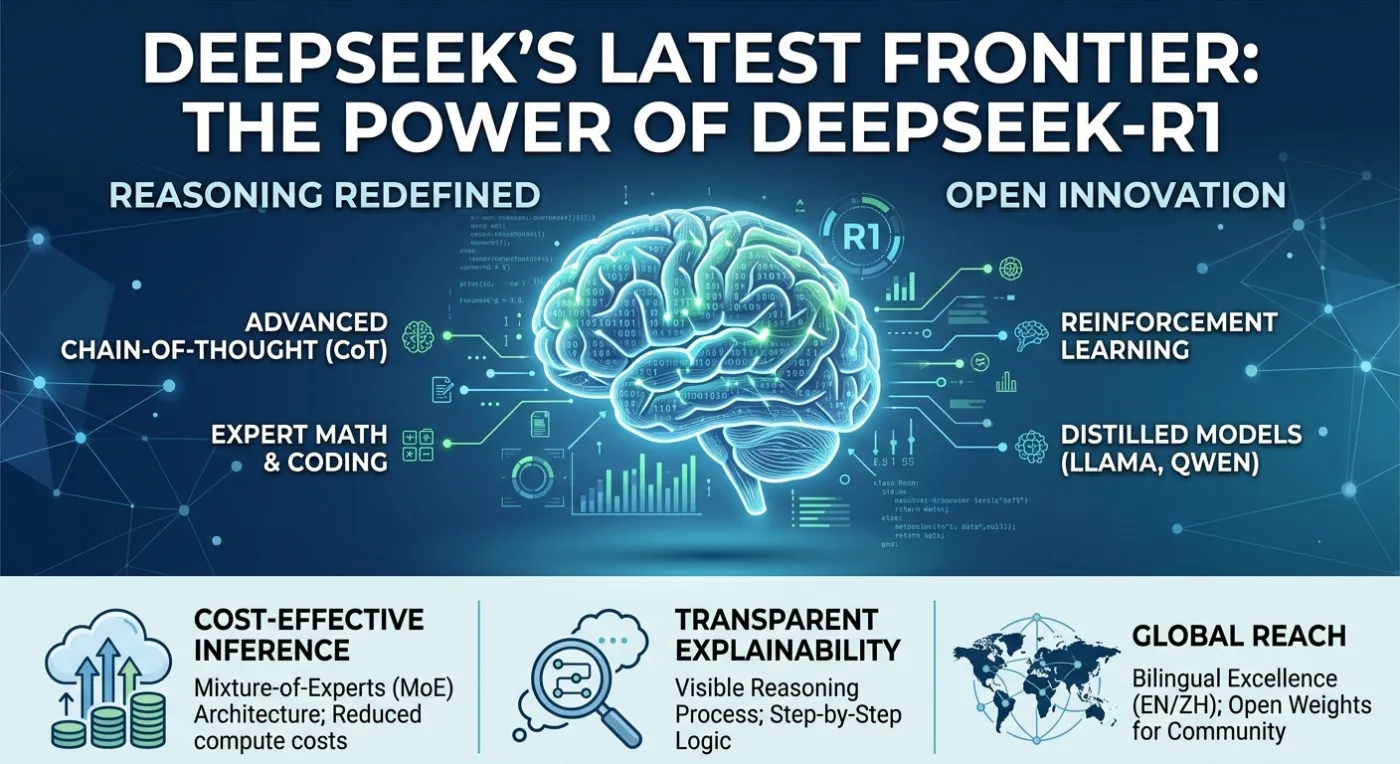
The artificial intelligence landscape is witnessing a massive paradigm shift with the release of DeepSeek-R1—a frontier model designed to rival top-tier proprietary models like OpenAI’s o1, but with an open-weights philosophy and unprecedented cost efficiency.
Key Features & Innovations
- Explicit Chain-of-Thought (CoT) Logic: DeepSeek-R1 introduces fully transparent, visible reasoning steps. Before outputting a final answer, it generates internal thought tokens to self-correct and verify complex logic.
- Pure Reinforcement Learning (RL) Foundation: Building upon DeepSeek-V3, R1 was trained using large-scale RL, demonstrating that advanced reasoning can emerge naturally without relying entirely on massive human-annotated datasets.
- Distilled Open Weights: To empower the developer community, DeepSeek distilled R1’s reasoning capabilities into smaller, efficient open-source models ranging from 1.5B to 70B parameters (built on Llama and Qwen bases).
Core Strengths
- Unmatched Math & Coding Performance: R1 matches or exceeds frontier models on complex math benchmarks (like AIME and MATH-500) and competitive programming challenges.
- Mixture-of-Experts (MoE) Efficiency: With 671 billion total parameters, it dynamically activates only 37 billion per forward pass, drastically cutting compute overhead.
- Drastic Cost Reduction: Offers state-of-the-art inference accuracy at a fraction of the token cost compared to closed-source alternatives.
DeepSeek is proving that open-weight models can lead at the absolute cutting edge of reasoning and problem-solving.
Share
Keep reading
Related articles
· 4 min read
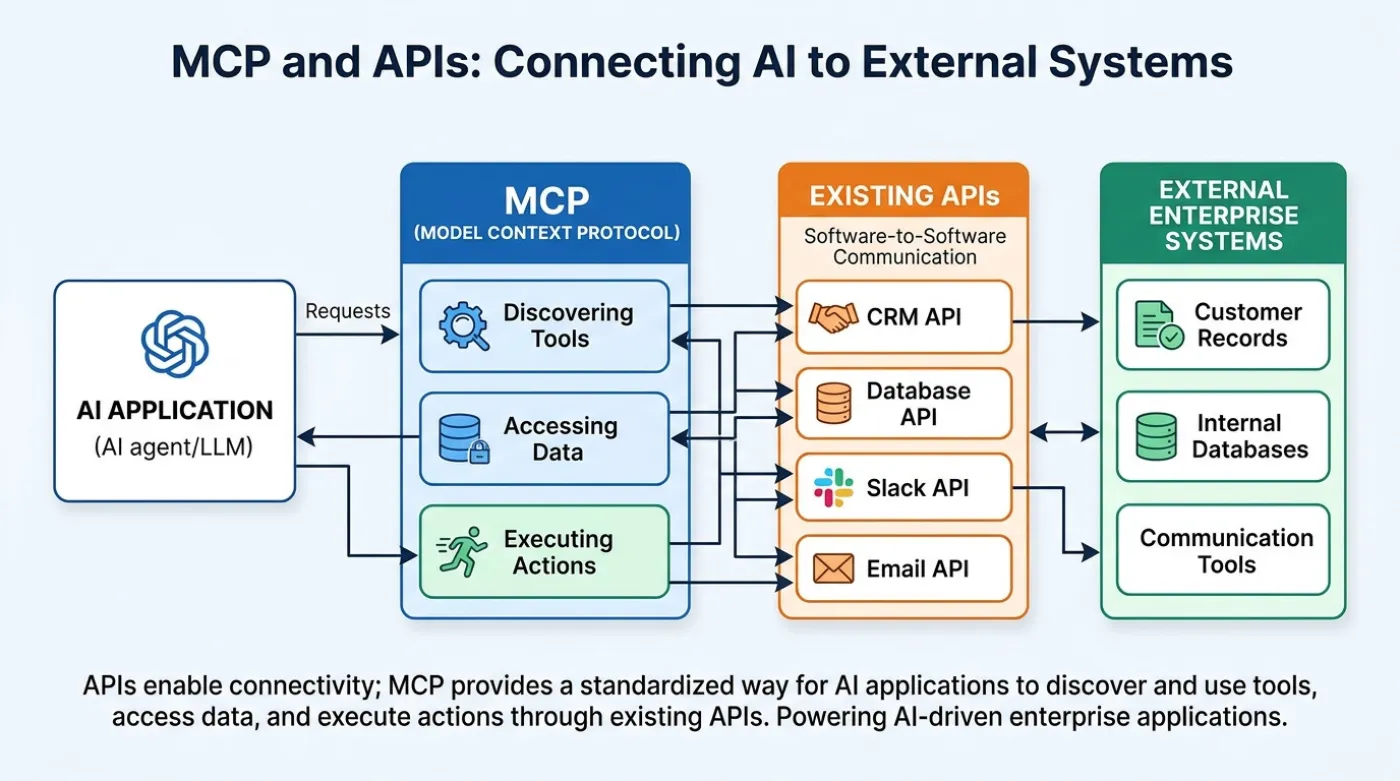
MCP vs API: How Does MCP Work With an API?
MCP (Model Context Protocol) and APIs work together to connect AI applications with external systems. While APIs enable software-to-software communication, MCP provides a standardized way for AI applications to discover and use tools, access data, and execute actions through existing APIs. Learn how MCP and APIs power AI-driven enterprise applications.
AI & Emerging Tech
· 2 min read
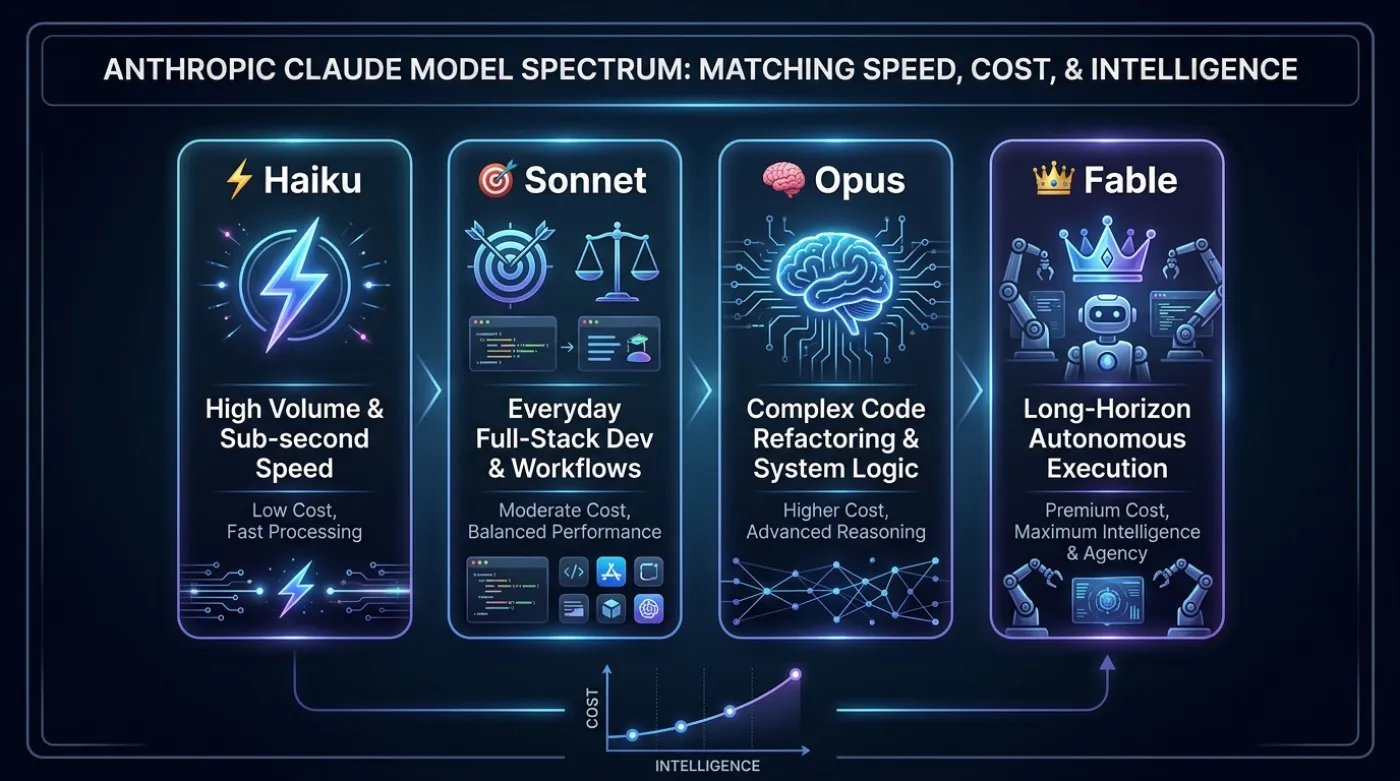
Stop Overpaying for AI: How to Choose the Right Claude Model for the Job
Choosing the right AI model isn't about using the most powerful one—it's about matching task complexity to processing speed and cost. Anthropic’s Claude lineup (Haiku, Sonnet, Opus, and Fable) provides a clear framework for balancing ultra-fast micro-tasks, everyday full-stack development, and complex, autonomous agentic reasoning.
AI & Emerging Tech

· 1 min read
AI Can Accelerate Our Work. It Cannot Take Away Our Accountability.
Speed without stewardship is a liability. While artificial intelligence dramatically accelerates output in software development and IT operations, it cannot shoulder the burden of accountability. For IT leaders, the true competitive advantage today isn't widespread adoption—it's strategic restraint. By pairing AI-driven velocity with rigorous human validation, security checks, and clear ownership, organizations can turn raw efficiency into sustainable value.
AI & Emerging Tech